
Inflatable or Acrylic Hot Tub? Stop Overthinking and Make the Right Choice Today
Published on: April 26, 2026 | Last Updated: April 26, 2026
Written By: Charlie Bubbles
If you’re scrolling through endless options, torn between a budget-friendly blow-up tub and a solid acrylic model, your confusion is the symptom. The diagnosis is simple: you’re trying to solve for both temporary fun and permanent luxury, which are two entirely different projects. This isn’t a dangerous issue, but picking wrong can lead to a costly backyard regret.
- Your maximum budget number
- An honest look at your commitment to maintenance
- A tape measure
- 3 minutes of focused reading
I’ll give you the clear, side-by-side breakdown so you can decide with confidence and skip the sales call.
Construction and Materials: Built to Last or Built to Move?
Lay your hands on the side of each tub, and you’ll feel the story immediately. An inflatable spa has the flexible, giving feel of a heavy-duty pool toy-because that’s essentially what it is. The walls are typically a laminated polyvinyl chloride (PVC) or vinyl, supported by internal air beams. The floor often has a patented I-beam construction for stability on grass or patios.
An acrylic tub, in contrast, feels solid and immovable. The shell is a vacuum-formed sheet of acrylic, backed by layers of fiberglass and resin for incredible strength. This rigid shell is then permanently mounted inside a full wooden or synthetic cabinet, which is packed with dense foam insulation. You’re not just feeling a tub; you’re touching a permanently installed appliance designed to handle decades of use and weather.
Core Components Under the Hood (or Cover)
This material divergence dictates everything about the components inside. I’ve fixed both, and the approach is night and day.
- Pump & Heater: Inflatable tubs use a single, integrated unit that houses the pump, heater, and controls. It clicks onto the side. Acrylic tubs have separate, industrial-grade components-a circulation pump, a larger jet pump, and a dedicated heater-all plumbed with rigid PVC pipe.
- Jet Systems: Inflatable tubs primarily use air jets. The pump blows air through the floor, creating bubbles. Acrylic tubs use true hydromassage jets that pump water under pressure; you can adjust the direction and intensity, and many are interchangeable for different massage types.
- Insulation: An inflatable tub is insulated by… air. The air in the walls and the cover provides some heat retention. A quality acrylic tub uses full foam insulation, where the entire cabinet cavity is filled with expanding foam that locks heat in and slashes energy costs.
Durability and the Repair Reality
Puncture resistance is the big worry with inflatables. A rogue branch or an enthusiastic pet can end the party, though repair kits with vinyl patches are effective for small holes. Weight capacity is lower, often capping around 4-6 people max. When the integrated pump fails, you usually replace the whole unit.
Acrylic shells are remarkably resilient to UV rays and chemicals. The repair process is more involved but more precise. A leaking jet can be re-sealed. A faulty pump can be swapped out. The modular nature of a permanent spa means you can fix almost any single component without scrapping the entire system, which saves money over a 20-year lifespan.
Cost Breakdown: Upfront Price vs Lifetime Investment
Don’t let the sticker price fool you. The real cost of a hot tub unfolds over years, like a slow-moving chemical reaction. I learned this the hard way by not calculating the “lifetime investment” on my first tub. That’s the payoff you rarely see: the hidden costs of hot tub ownership. From energy use to ongoing maintenance, these can add up long after the initial purchase.
An inflatable spa wins the battle of initial outlay. You can have one delivered to your door, filled, and heating for well under a thousand dollars. There’s no installation cost if you have a standard 120V outdoor outlet. An acrylic spa’s purchase price is significantly higher, and that’s before the critical added costs: a reinforced concrete pad, delivery by a specialized truck, and professional installation of a dedicated 240V electrical line, which can easily add $1,000-$3,000 more.
The Yearly Grind: Operating Costs
This is where the tables turn. That air-wall insulation on an inflatable is fighting a losing battle against winter cold. You’ll hear its heater humming constantly, spiking your electric bill. Expect to refill it more often, too, as the lighter construction and frequent draining for storage degrade water stability.
A fully foamed acrylic tub is an energy miser in comparison. Once the heavy shell and water mass are heated, the foam holds that heat like a thermos. Properly maintained, a high-quality acrylic tub can cost only marginally more to run year-round than an inflatable does for a single season, making its higher upfront cost a wise efficiency play.
Chemical use is similar, but filter costs differ. Inflatables use small, inexpensive cartridge filters you replace often. Acrylic tubs use larger, more durable filters you can deep-clean, though they cost more when you finally do replace them.
| Cost Factor | Typical Inflatable Hot Tub | Typical Acrylic Hot Tub |
|---|---|---|
| Initial Purchase | $500 – $1,500 | $5,000 – $15,000+ |
| Installation & Electrical | $0 – $200 (if outlet needed) | $1,000 – $3,000+ |
| Estimated Annual Energy Cost* | $300 – $600 | $200 – $400 |
| Typical Warranty (Shell) | 1-2 years | 5-10 years, sometimes lifetime |
| Lifespan Expectancy | 2-5 seasons | 15-20+ years |
*Varies drastically by climate, use, and model efficiency.
Finally, warranty tells you what the manufacturer believes about their product. Inflatable warranties are short, often just a year or two on the shell. Acrylic tubs back their shells with 5 to 10-year, even lifetime, warranties, signaling an expectation of longevity that you should factor into your investment math.
Setup and Installation: From Backyard to Soak Time
-
Getting an inflatable hot tub ready is a weekend project you can tackle yourself. You start by unboxing it on a level patch of grass or patio, then use the supplied air pump to inflate the walls-that steady hum means you’re almost there. If you want the exact inflation steps, the set up inflatable hot tub inflation filling instructions cover them in detail. It also explains how to verify the walls are evenly inflated before you start filling with water. Connect a garden hose to fill it; I always use a pre-filter on my hose to keep metals out. Once full, plug it into a standard outdoor GFCI outlet and let the heater work, which can take 12-24 hours for the first warm-up. Finally, you’ll add your startup chemicals, circulating the water to mix them thoroughly.
-
Installing a permanent acrylic tub is a serious commitment. Site preparation is critical: you must create a perfectly level, reinforced base, often with a concrete pad or specialized spa pad. Next, a licensed electrician must run the dedicated 220V line and hardwire the tub, a step I never recommend skipping for safety. After the tub is craned or moved into place, a pro should check all plumbing connections before filling. The initial system startup involves purging air from the jets and programming the control panel, which sets the stage for years of use.
-
The time investment between these two types is night and day. You can go from box to soak in an inflatable model in under a day, while a permanent acrylic installation can easily stretch into a week or more. That includes time for site prep, electrical work, and the careful filling and heating process. My own first acrylic install took three full days, teaching me patience pays off in a leak-free setup.
-
Your tool list reveals the complexity gap. For an inflatable, you mainly need a garden hose, the included inflation pump, and a chemical test kit. For acrylic, you’ll require a contractor’s level, concrete tools, and most importantly, a qualified electrician’s service. I keep a dedicated hose and sump pump for draining both types, which saves messy cleanup later.
Energy Efficiency and Heat Retention: Keeping Warm Without Waste
-
Insulation is where these tubs fundamentally differ. Acrylic models boast a full foam jacket that encases the plumbing, acting like a thermos to lock in heat with minimal energy loss. Inflatables rely on air-filled walls and a floating cover for insulation, which means more heat escapes into the cool night air. I’ve felt the difference on my skin; the acrylic tub’s shell stays warm to the touch, while the inflatable’s sides can feel cool.
-
Heating performance directly hits your wallet. An acrylic tub in a temperate climate might use 3-5 kWh per day to maintain temperature, whereas an inflatable in the same spot could use 5-8 kWh or more, especially if it’s windy. Acrylic units heat faster from cold and recover temperature quicker after use. In colder regions, this efficiency gap widens, making the operating cost of an inflatable surprisingly high over a season.
-
Smart habits maximize efficiency for any tub. Always keep the cover on when not in use-it’s the simplest way to slash heating costs by reducing evaporation. I add a floating thermal blanket to my inflatable for extra defense. Maintaining perfect water balance is also key; scale buildup on heaters makes them work harder. Check your filter monthly; a clean filter improves circulation and reduces pump runtime. For maximum energy efficiency, insulate the hot tub itself—walls, base, and any exposed plumbing. This simple step complements the cover and blanket and helps retain heat more effectively.
-
Let’s talk numbers with a real-world example. Running a well-insulated 300-gallon acrylic tub in a mild climate might cost $20-$30 monthly, while a comparable inflatable could edge toward $40-$50, based on average electricity rates. Over a six-month season, that difference can buy a lot of sanitizer. Remember, a leaky cover or poor chemistry can drive these costs even higher, which is why I test my water every week without fail.
Durability, Lifespan, and Common Repairs
Think of an inflatable tub like a rugged, high-end air mattress and an acrylic spa like a solid piece of furniture. The difference in their staying power is dramatic. With meticulous care, an inflatable spa might serve you for 5 to 10 years, while a well-maintained acrylic tub can easily last 15 to 20 years or more, becoming a long-term backyard fixture.
Common Issues & The DIY Handyman’s Approach
Each type has its own unique aches and pains. I’ve fixed plenty of both over the years, and knowing what to expect saves a lot of weekend headaches.
- Inflatable Hot Tubs: Your main foes are punctures from sharp objects, seam leaks where panels join, and pump/air blower failures. The vinyl is tough, but not impervious.
- Acrylic Hot Tubs: Troubles are more mechanical: hairline shell cracks (rare but serious), plumbing leaks at pipe joints, and heater or circulation pump failures. The shell itself is incredibly durable.
Roll Up Your Sleeves: Simple Repairs You Can Do
Many problems have straightforward fixes. For a puncture in an inflatable, a vinyl patch kit with clear adhesive is a permanent cure if you clean and dry the area first. For a leaking PVC pipe union on an acrylic spa, a proper fix involves cutting out the bad section and using new couplings, PVC primer (the purple stuff), and solvent cement. Taking the time to sand the pipe ends and apply primer ensures a leak-free bond that will last for years.
That hum from the circulation pump going silent often points to a failed capacitor-a $15 part I’ve swapped many times with just a screwdriver. But know your limits. Always call a certified technician for any repair involving the electrical control box, heater element wiring, or if a plumbing leak is behind the insulated cabinet where you can’t clearly see the source. Your safety is worth more than the service call.
Maintenance Routines: Water Chemistry and Filter Care
-
Master Water Balance First, Sanitizer Second. This is my cardinal rule. Test total alkalinity (TA) and pH every single week. Aim for 80-120 ppm TA to lock in your pH, which should be a comfortable 7.2 to 7.8. Get this right, and your sanitizer-whether dichlor granules or bromine tablets in a floater-works effectively without burning your eyes or damaging the tub.
-
Filter Care is Non-Negotiable, But Frequency Differs. An inflatable’s small filter gets clogged fast; rinse it with a hose every week. An acrylic tub’s larger pleated cartridge filter needs a deep monthly clean. I soak mine overnight in a filter cleaner solution to dissolve oils that a hose can’t touch, then rinse until the water runs clear.
-
Recognize the System Differences. Inflatable tubs are drained and refilled more often, so you’re constantly re-balancing new water. Acrylic spas, with their stable water volume, require diligent weekly shock treatments to oxidize waste and keep the water from getting dull or cloudy. The sting of chlorine you sometimes smell isn’t fresh sanitizer; it’s chloramines, a sign your water is begging for a shock.
-
Seasonal Shutdowns Are World’s Apart. Winterizing an acrylic tub is a precise process of blowing out lines with a shop vac and adding non-toxic antifreeze to the plumbing. An inflatable model is simpler: drain it completely, dry it thoroughly, fold it, and store it in a garage. One is a project; the other is putting away a seasonal item.
Comfort, Features, and the Soaking Experience
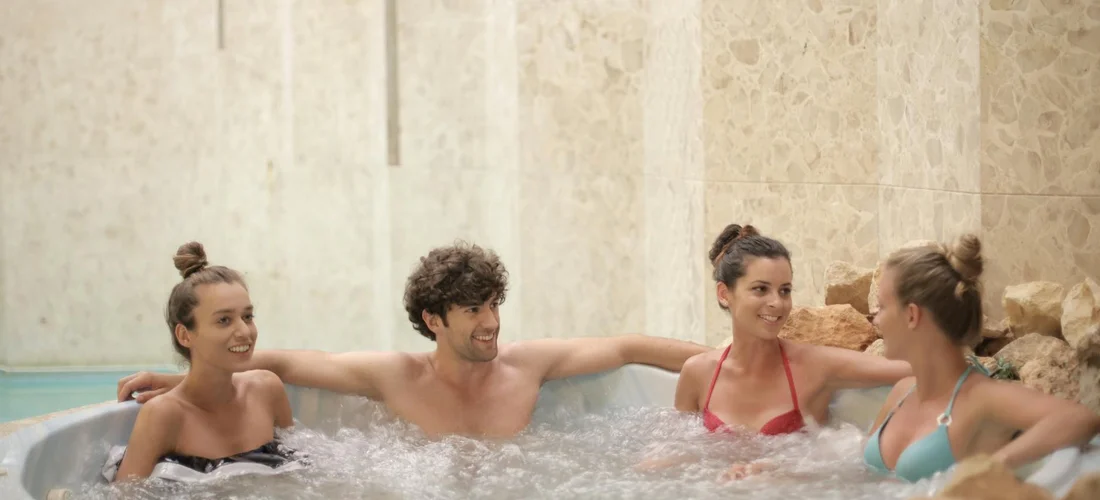
Sliding into the water after a long day is what it’s all about, and the feel of your tub makes a huge difference. From my own soaks and fixing countless models, I can tell you the experience splits right down the line between inflatable and acrylic designs. Let’s break down where each one shines or falls short.
Seating Design: Built-In vs. Make-Your-Own
Acrylic tubs have hard, molded shells with contoured seats. Your back and legs settle into ergonomic curves designed for support. Inflatable tubs, by contrast, have a single, flat floor made of flexible vinyl or PVC.
- Acrylic & Hard-Shell Tubs: You get dedicated, bucket-style seats that cradle your body. This is fantastic for targeted jet massage and just lounging without floating around.
- Inflatable Tubs: The seating is entirely flexible. You sit on the floor, which can be comfortable with a cushioned mat, but you’ll drift more. I’ve found adding a simple foam kneeling pad from the hardware store can create a surprisingly good makeshift seat spot.
Jet Power and Hydrotherapy
This is where the rubber meets the road-or rather, where the water meets your muscles. The hum of a powerful pump behind acrylic jets is a sound of real therapy.
- Acrylic Tubs: They feature multiple, hard-plumbed jets-often 20 to 50 or more. These jets are adjustable; you can twist them to target a knot in your shoulder or turn them off entirely. The pressure is stronger, fed by more potent pumps.
- Inflatable Tubs: Most have a ring of air-powered jets (around 100-140) that create a gentle bubbling sensation. While soothing, they lack the deep, kneading power of a true hydrotherapy jet system and aren’t adjustable. Think relaxing bubbles versus deep tissue massage.
Luxury and Atmosphere Features
Beyond the soak, extra features add to the ambiance. Acrylic models typically lead here.
- LED lighting systems that cycle through colors are common in acrylic spas.
- Waterfall features for gentle sound and visual appeal.
- Integrated stereo or Bluetooth speaker systems, sometimes with waterproof remotes.
- Inflatable tubs are catching up with basic LED lights, but high-end audio or water features are rare due to their portable nature and power constraints.
The Intangible Comfort Factors
It’s the little things you feel. Acrylic shells retain heat brilliantly, so the water temperature stays rock-steady even in a cold wind. The water depth is usually greater, allowing for a full submersion experience. In an inflatable, you’ll notice more temperature fluctuation, and the vinyl material has a distinctly different, softer “give” underfoot compared to the firm, smooth acrylic.
Portability and Space: Permanent Fixture or Seasonal Solution?
Where and how you place your tub is a decision with long-term consequences. Your choice here affects your yard, your budget, and even your rental agreement. Let’s weigh the anchor, so to speak.
True Portability vs. Permanent Installation
- Inflatable Tubs: This is their superpower. You can deflate one, roll it up, and store it in a garage closet or move it to a new home in your car trunk. Perfect for seasonal use or renters.
- Acrylic Tubs: These are permanent installations. Once placed on a prepared base and wired in, moving them requires a professional crew with a crane. I helped a client move one once; it was a full-day project involving permits for closing the street.
The Immovable Weight of Water
Never underestimate what water adds. A standard acrylic hot tub holds 400-500 gallons. Water weighs 8.34 pounds per gallon, so you’re looking at over 3,300 pounds of water plus the shell’s weight. That’s why a reinforced concrete pad is non-negotiable for acrylics-anything less will crack and settle. An empty inflatable might weigh 80 pounds, and full, it’s still manageable for a deck designed for live loads.
Space and Site Planning
Your available space dictates your options more than you might think.
- Inflatable Tubs: They offer flexibility. A level patch of grass, a sturdy deck, or a patio can work. Just be mindful of punctures from below. When winter comes, you can pack it away and reclaim the square footage.
- Acrylic Tubs: They need a dedicated, perfectly level site-usually a 4-inch concrete slab or reinforced patio. You must also consider local fencing codes for safety and permanent access to electrical service. Plan for at least a 10×10 foot area for the tub and service access.
Guidance for Renters and Small Spaces
If you’re renting or have a postage-stamp patio, an inflatable is your best friend. You can set it up for a summer season and store it when you move. Just remember you need a flat, clean surface and a dedicated GFCI outlet within the cord’s reach-never use an extension cord. For acrylics, you need landlord approval and should treat it like installing a built-in appliance, because that’s essentially what it is.
Common Questions
Which type is more portable and why?
Inflatable hot tubs are definitively more portable. They can be fully deflated, folded, and moved by one or two people, making them ideal for seasonal use, renters, or changing your backyard layout. Inflatable hot tubs are especially convenient in these scenarios. Acrylic spas are permanent installations due to their immense weight (thousands of pounds when full) and require a professional crew with specialized equipment to relocate.
What are the differences in comfort and features?
Acrylic tubs offer ergonomic, molded seating and powerful, adjustable hydromassage jets for targeted therapy, along with luxury features like LED lighting and sound systems. Inflatable tubs have a flat, flexible floor and provide a gentle bubbling sensation from air jets, with far fewer high-end amenities, resulting in a more basic relaxing soak.
How do their durability and lifespan compare?
Durability and lifespan differ significantly. A well-maintained acrylic hot tub is a long-term investment, often lasting 15-20+ years with a repairable, modular system. An inflatable tub, while rugged, is more susceptible to punctures and component wear, typically serving well for 2-5 seasons before needing replacement. Understanding the average lifespan of each option also informs financing decisions, helping you balance upfront costs with years of use. In the next steps, we’ll connect this to typical hot tub financing options.
What are the typical cost differences over time?
The cost profile varies dramatically. Inflatable tubs have a very low upfront cost but higher ongoing energy expenses due to poor insulation, making them a pay-as-you-go option. Acrylic tubs require a major initial investment for the unit, installation, and electrical work, but their superior efficiency leads to lower annual operating costs, paying off over many years.
What are the key considerations for choosing between them?
Your choice hinges on three main factors: budget (initial vs. long-term), intended use (permanent fixture vs. seasonal/temporary), and commitment level. Consider how long you plan to stay in your home, your willingness to perform regular maintenance, and whether you prioritize deep therapy jets and luxury or simple, affordable relaxation.
It’s Maintenance O’Clock
Before you slip into that first perfect soak, give your system a final once-over. Turn on the jets for a few minutes, listening for that smooth hum and checking for strong, even flow from every port. Take a final look at your test strip. That final check is your insurance policy for a safe, relaxing experience.
Whether you own a bouncy inflatable or a solid-shell acrylic model, your single most important habit is this: balance your total alkalinity before you adjust anything else. Get that buffer between 80-120 ppm, and your pH will stop bouncing around, your sanitizer will work properly, and you’ll prevent a world of scaling and corrosion. This one step solves 80% of water chemistry headaches before they start.
You’ve done the homework, made the choice, and set everything up right. The hard part is over. Now, go enjoy that warm, bubbly reward. Your back will thank you, whether you’re floating in an air-filled haven or settled into a rigid-shell classic.
Further Reading & Sources
- Plug and Play Hot Tubs vs Inflatable Hot Tubs – Artesian Spas
- Are Inflatable Hot Tubs Worth It? See Why or Why Not!
- The Three Main Types of Hot Tubs: Which Is Right for You? – Hydropool UK
- Comparing Timber, Inflatable, and Acrylic Portable Hot Tubs
- Comparing Hot Tub Shell Materials – Aqua Living Factory Outlets
- The Definitive Guide to Inflatable Hot Tubs
Charlie is a hot tub enthusiast with a passion for keeping your jets running smooth and your bubbles bursting with joy. With years of experience in hot tub and jacuzzi maintenance, Charlie knows that a happy tub means a happy you. Whether it’s dealing with stubborn filters or giving your spa a little TLC, Charlie’s here to share expert tips, tricks, and plenty of laughs to help you keep your bubbly retreat in tip-top shape. So, kick back, relax, and let Charlie handle the rest — because no one likes a cranky jacuzzi!
Hot Tub Reviews