
How to Slash Your Hot Tub’s Electricity Bill in 3 Simple Steps
Published on: January 22, 2026 | Last Updated: January 22, 2026
Written By: Charlie Bubbles
If your utility bill gives you a jolt every month and your hot tub feels warm but your wallet feels cold, you’ve found the right place. Your hot tub is almost certainly wasting electricity through heat loss, an overworked pump, or outdated settings. This isn’t a dangerous electrical fault, but it’s a costly nuisance that drains your budget silently, month after month.
What You Need:
- Your last electricity bill
- A digital thermometer (for water and air)
- 10 minutes to check your settings
- A tape measure for your cover
I’ve balanced water and fixed pumps for years, and I promise you can plug this energy leak yourself-no expensive service call required.
What Determines Your Hot Tub’s Electricity Bill?
The Big Three: Heater, Pump, and Heat Loss
Picture your spa’s energy use like a three-legged stool. If one leg is weak, the whole thing tips over into high costs. The heater is your power-hungry giant, the pump is the steady marathon runner, and heat loss is the silent thief stealing your warmth day and night.
Your heater draws a lot of juice but only in short bursts. A standard 4kW element pulls 4000 watts when it fires up to recover heat after you’ve used the tub or during a cold snap. That’s a massive draw, but it’s intermittent.
The circulation pump is the opposite. It hums along constantly at a low wattage, typically 80 to 150 watts, to move water through the filter. This small, continuous draw is the baseline cost of owning a hot tub, and it never shuts off.
Heat loss through the shell and cover is what you’re constantly fighting. Your tub seeks thermal equilibrium with the outside air. A cheap cover or poor full-foam insulation turns your spa into a radiator, bleeding heat and forcing the heater to cycle on more often.
5 Key Factors That Spike Your Spa Energy Bill
Beyond the basics, these five elements will make or break your monthly power bill. I’ve fixed enough spas in freezing winters and blistering summers to see these patterns firsthand.
-
1. Insulation Quality and Cover Fit
Insulation is rated by R-value—a number that tells you how good it is at trapping heat. Most hot tub shells have an R-value between 12 and 20. A worn-out cover with broken seals can slash your insulation’s effectiveness by half, letting precious heat and money evaporate into the cold air. I always recommend a floating thermal blanket; it’s a cheap layer of bubble wrap that cuts surface heat loss dramatically. To learn more, consult the complete guide to floating thermal blankets for hot tubs. It covers how to choose the right blanket, how to use it effectively, and how to maximize heat retention.
-
2. Heater Wattage and Thermostat Habits
Heaters commonly come in 4kW, 5.5kW, and 6kW sizes. Bigger isn’t always better for your wallet. A 6kW heater heats faster but uses more power per hour. Dialing down your thermostat from 104°F to 101°F can save you 10-15% on heating costs, and you’ll barely notice the difference when you slip into the water. I set my personal tub to 100°F in the summer and only crank it up for parties.
-
3. Pump Horsepower and Duty Cycles
This is where many owners get surprised. Your jet pump for massage might be a 1 HP beast drawing 1500 watts, while your circulation pump is a meek 1/20 HP sipping just 100 watts. Programming your filter cycles smarter is free efficiency; in summer, 6 hours a day is plenty, but in winter, you might need 12-18 hours to prevent freezing and maintain clarity.
-
4. Local Climate and Seasonal Swings
Your geographic location is the single biggest wild card. Keeping a tub hot during a Minnesota winter is a completely different energy battle than in Arizona. Here’s a simple comparison of what you might expect in extra monthly energy use just for heating, assuming a standard 400-gallon tub: That context also helps bust 5 common myths about hot tub energy consumption costs. We’ll separate fact from fiction and show what actually drives those costs.
Climate Zone Average Winter Low Estimated Added Monthly kWh Frigid (e.g., Minnesota, Maine) Below 20°F 350 – 600 kWh Moderate (e.g., North Carolina, Missouri) 20°F – 40°F 200 – 350 kWh Mild (e.g., Arizona, California) 40°F+ 50 – 150 kWh These numbers assume a well-insulated tub. A poorly maintained one can easily double these figures.
-
5. Tub Size, Usage Frequency, and Water Care
A larger tub means more water to heat-simple physics. But your water chemistry plays a sneaky role. Unbalanced water with high calcium hardness (above 400 ppm) will coat your heater in scale, making it labor like a clogged artery and consume far more electricity to transfer heat. Clean, balanced water around 150 ppm calcium is just as important for your bill as it is for your skin.
Breaking Down Hot Tub Energy Consumption: Pumps, Heaters, and More
How Much Electricity Does the Heater Really Use?
Heater consumption has two distinct modes: the initial recovery phase and the maintenance phase. Recovery heating is like bringing a giant pot of soup to a boil-it requires a intense, concentrated burst of energy up front. If you let your tub cool down and then heat 400 gallons from 60°F to 104°F, a 4kW heater might run solidly for 12 hours, using about 48 kWh.
Once at temperature, maintenance heating is like keeping that pot on a low simmer. The heater only clicks on for 10-20 minutes at a time to top up the heat lost through the shell. This is where good insulation pays off, reducing those maintenance cycles to a minimum.
The Hidden Cost of Pumps: Jet Pumps vs. Circulation Pumps
People fear the heater, but the pumps tell the real story. Your jet pump is a luxury appliance. A 1.5 HP jet pump can draw 1800 watts, but you only use it for therapy sessions. A 30-minute jet session adds about 0.9 kWh to your usage.
The real hidden cost is the 24/7 circulation pump; at 100 watts, it quietly consumes 2.4 kWh every single day, which adds up to nearly 75 kWh on your monthly bill before you even turn on a jet. Investing in a two-speed or variable-speed circulation pump can cut that draw in half during long filter cycles.
Standby Power and Accessory Drains: Lights, Stereo, Ozone
The small, constant drains are what I call “energy leaks.” Your digital control panel is always on, often drawing 5-10 watts. An ozone generator might use 20 watts continuously. While each accessory seems insignificant, together they can passively add 1 kWh or more to your daily consumption, which is 30+ kWh monthly you don’t even see working.
Air blowers for extra bubbles are power hogs, often rated at 500-1000 watts for short bursts. Salt chlorine generators have a constant transformer load. My advice is to be ruthless: unplug accessories you don’t use daily and put systems like ozone on a timer to sync with filter cycles.
How to Calculate Your Hot Tub’s Energy Costs
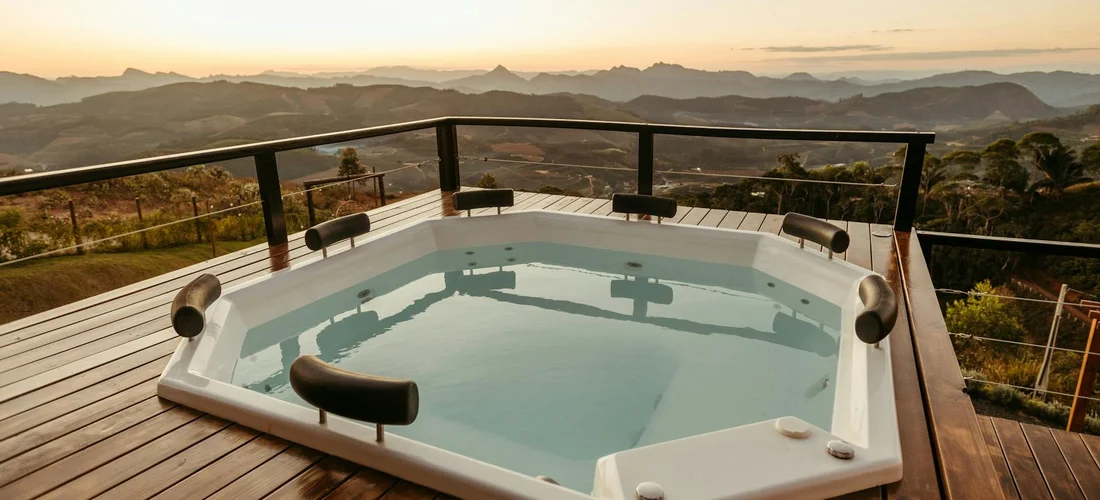
Your Handyman’s Hot Tub Electricity Usage Calculator
Let’s grab a notepad and run the numbers together. Forget complex formulas; we’re using the same math you’d use to figure out how much a light left on all night costs. You only need three pieces of information.
The core formula is: Heater kW x Daily Run Hours x Cost per kWh = Your Daily Cost.
First, find your heater’s kilowatt (kW) rating. Check the specs on your spa’s data plate, usually inside the equipment compartment. Common sizes are 1.5 kW, 4 kW, 5.5 kW, or 6 kW.
Second, estimate daily run time. The pump and heater don’t run 24/7. The circulation pump might run 6-8 hours daily for filtration, while the heater kicks on as needed to maintain temperature. For a standard 240V tub in mild weather, a safe average is 4-6 hours of combined heater run time.
Third, know your rate. Dig out your utility bill and find the cost per kilowatt-hour (kWh). It’s often buried in the small print. The U.S. average is about 16 cents, but it can range from 10 cents to over 40 cents.
Sample Calculation
Let’s say you have a common 5.5 kW heater, it runs about 5 hours a day to keep up, and you pay 18 cents per kWh.
- 5.5 kW x 5 hours = 27.5 kWh consumed per day.
- 27.5 kWh x $0.18 = $4.95 per day.
- Monthly estimate: $4.95 x 30 days = about $148.50.
Remember, this is mostly for the heater; the smaller circulation pump adds a bit more, but the heater is your big energy eater.
Estimating Your Monthly and Annual kWh Consumption
Your actual consumption dances with the weather. In a temperate climate with a well-insulated, covered tub, you might see 150 to 300 kWh per month. When winter digs in and the air bites, that number can easily jump to 300, 400, or even 500+ kWh monthly as the heater fights to hold your 102°F paradise.
For perspective, a modern refrigerator might use 50 kWh a month; your hot tub can use as much as six fridges during a cold snap. Over a year, a dedicated spa can add 2,000 to 6,000 kWh to your bill, a significant chunk that’s worth managing.
I’ve monitored my own units, and the hum of the pump becomes a familiar sound. You learn to listen for it cycling on less frequently when your water is balanced and your cover is sealed tight.
Understanding Your Utility Bill and Time-of-Use Rates
Your electricity bill holds the key to smart savings. Don’t just glance at the total; find the line that states your “Price per kWh.” It might be a single flat rate, or it could be a tiered or time-of-use (TOU) plan.
If you’re on a TOU plan, your cost per kWh changes based on the time of day, with peak hours (often afternoons and early evenings) being the most expensive.
This is your secret weapon. Program your filter cycles to run during super off-peak hours (often late night to early morning). Most tubs let you set two filtration periods. Set one for 2 AM and another for midday if needed. The heater will also fire during these cheaper cycles to maintain temperature, slashing your operating cost without you lifting a finger. See this complete guide for details on how long each filtration cycle should run and how often you should run them. With the right timing, you’ll maximize efficiency and water quality.
Real-World Hot Tub Electricity Usage: From Reddit to California
Anecdotes from the Field: What Owners Actually Report
Scrolling through owner forums paints a vivid, varied picture. You’ll see the triumphant posts from folks in Georgia with a new foam-filled spa reporting an added $15-20 a month. Then you’ll find the grimace-inducing stories from Ontario or the UK in January, where bills spike $100 or more.
The most common shock comes from owners in places like California, Hawaii, or New England, where high per-kWh rates meet cold nights, turning a relaxing soak into a premium luxury on the monthly statement.
The consensus? A modern, full-featured hot tub is an appliance, not a light bulb. Budget for it. The owners who complain the least are the ones who insulated the cabinet with extra foam, use a thermal floating blanket under the lid, and keep their filters clean.
The Impact of Voltage: 110V Plug-and-Play vs. 240V Hardwired Models
This is a crucial and often misunderstood distinction. A 110V “plug-and-play” spa seems convenient, but physics dictates its operation. It typically uses a standard household circuit, limiting its total power.
The critical limitation: On most 110V models, the heater and the high-speed jet pump cannot run at the same time. You must choose between heat or powerful jets. In cold weather, the tub can struggle to reach or maintain temperature, especially during a soak when the jets are on and the heater is off.
This leads to longer recovery times and the heater running more hours per day to catch up. A 240V hardwired spa has a dedicated, more powerful circuit. Its heater and jets can operate simultaneously, maintaining temperature efficiently even during use. While its heater draws more power at once, it runs for far fewer total hours. In my experience, a properly set-up 240V tub is almost always more energy-efficient and cost-effective over a season than a 110V model fighting an uphill battle against the cold. For more details, check out this guide comparing 110V and 220V hot tubs.
Boost Your Spa’s Energy Efficiency: Pro Maintenance Tips
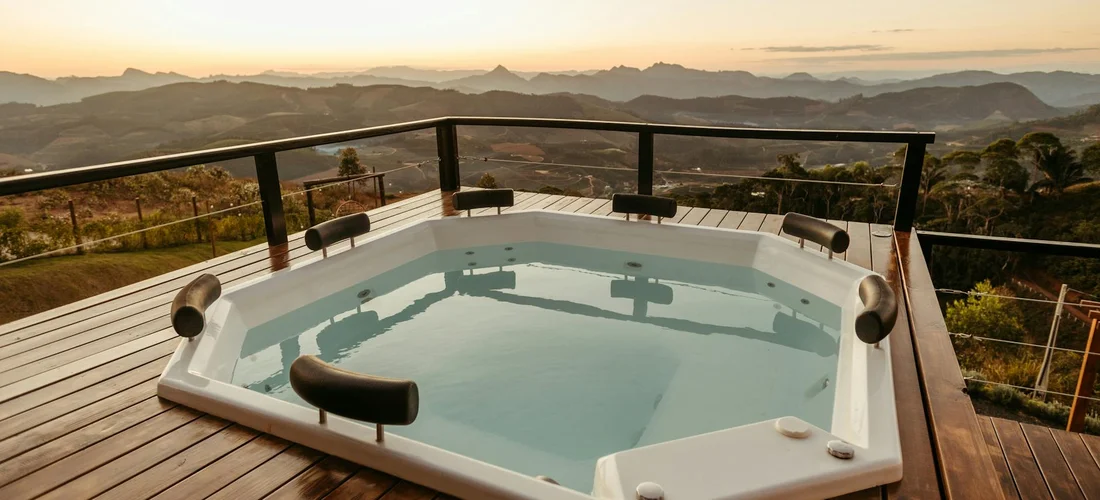
Your Energy Audit: A 15-Minute Inspection Checklist
Grab a flashlight and let’s walk through a quick inspection. I’ve saved clients hundreds by spotting these simple energy leaks during routine service calls.
Four Critical Checkpoints
- Cover Seals: Run your hand around the cover’s skirt. Feel for cold air or visible gaps-heat escapes here first. A good seal should be pliable and tight.
- Insulation Gaps: Open the equipment compartment. Look for missing or compressed foam around pipes and the heater. Even a fist-sized hole can waste significant warmth.
- Filter Cleanliness: Remove the filter cartridge. If it’s tan or stiff with debris, it’s forcing the pump to labor. A clean filter means efficient flow and lower watts.
- Thermostat Setting: Verify the panel readout with a digital pool thermometer. I’ve found discrepancies of 4°F or more, leading to stealthy energy drain.
Top 5 DIY Fixes to Slash Your Hot Tub Energy Bill
These are the fixes I perform on my own tub. You can tackle them all in a weekend with basic tools and see a real difference on your next bill. Having the essential hot tub repair tools every DIYer should have on hand makes these fixes even easier.
1. Optimize Your Filter Cycle Program
Default settings often run filtration for one long, inefficient stretch. Program your spa for two shorter cycles-like three hours at dawn and three in the evening-to take advantage of cooler, off-peak hours. This reduces pump wear and keeps heat loss during filtration minimal.
2. Master Water Chemistry to Protect the Heater
Scale and biofilm on the heater element act like a ceramic coffee mug around a spoon-it insulates, causing slow, wasteful heating. Keep calcium hardness steady between 150-250 ppm and use a monthly pipe cleaner to dissolve invisible biofilm. I use a Taylor test kit for precision, because guesswork here costs you dollars.
3. Upgrade Your First Defense: The Cover and Seal
A waterlogged cover is a massive heat sink. Lift a corner; if it’s heavy, the core is saturated. Apply closed-cell foam tape to any leaking areas on the skirt, and invest in a reflective cover cap to block UV degradation. I extended my cover’s life by three years with this $20 fix.
4. Improve Heat Retention with a Thermal Blanket
Evaporation steals more heat than conduction. A floating bubble blanket cuts that loss dramatically, letting your heater rest more often. Trim it to fit inside your cover, and you’ll notice the hum of the heater kicking on far less frequently.
5. Strategic Temperature Management
Your tub doesn’t need to be at party temp 24/7. For extended absences, lower the thermostat by 2-3 degrees, or install an inexpensive inline timer to warm the water only before your scheduled soaks. This simple habit can shave $15 or more off a monthly bill—especially if you typically leave your hot tub on all the time.
The Verdict on Hot Tub Energy Costs: Is It Worth It?
Comparing Costs: Hot Tub vs. Other Home Luxuries
Frame the expense in familiar terms. A well-maintained spa often costs between $25 and $60 monthly-comparable to a premium gym membership or a bundle of streaming services. You’re trading one form of leisure for another, but with the added benefit of hydrotherapy at your doorstep.
Investing in Efficiency: When to Repair, Retrofit, or Replace
This decision hinges on your tub’s age and construction. For a mid-life spa (5-10 years old) with partial foam, adding spray-in insulation can be a wise, cost-effective retrofit that pays back in two seasons. If your shell is from the 1990s with minimal insulation, however, a new, fully foamed model will be far kinder to your wallet and the grid. I helped a neighbor make this call last summer after his pump died for the third time — we compared full-foam versus perimeter insulation in hot tubs to make the decision easier.
FAQs
How much electricity does a hot tub typically use per hour?
An operating hot tub’s hourly electricity use varies dramatically based on which component is running. The powerful jet pump can draw 1500-1800 watts per hour during a massage session, while the heater uses 4000-6000 watts when actively heating. However, the smaller circulation pump, which runs constantly, uses a much lower 80-150 watts per hour, forming your baseline energy cost. To understand how many amps these components draw, a detailed guide translates watts into amps at common hot tub voltages, helping you estimate circuit needs and safety margins.
Is there a reliable hot tub electricity usage calculator I can use?
Yes, many reputable spa manufacturers and energy agencies offer online calculators. To use one effectively, you’ll need your heater’s kW rating, estimated daily run time, and local cost per kWh. Remember that calculators for the UK will factor in different average climate conditions and typical 240V systems compared to some US-based tools.
Why do people on Reddit often ask about hot tub electricity usage?
Platforms like Reddit provide unfiltered, real-world cost reports from owners in diverse climates, which can be more relatable than manufacturer estimates. Discussions often reveal practical tips, like the impact of using a thermal blanket or programming filter cycles, and help set realistic budget expectations based on actual monthly bills shared by the community.
Is hot tub electricity usage in California significantly different?
Yes, costs in California are often higher due to a combination of some of the highest electricity rates in the nation and diverse local climates. While the temperate coastal regions see moderate usage, colder inland areas experience more heating demand, making the high per-kWh cost particularly impactful on the monthly bill.
What was different about hot tub electricity usage in 2021?
The year 2021 was notable for significant volatility in energy prices and increased time spent at home for many, leading to more frequent hot tub use. This combination caused many owners to see higher-than-average annual costs, prompting a surge in online searches for efficiency tips and real-world usage data from that specific period.
The Energy-Soak Handshake
Before you slide into that perfectly warmed water, give your system a final once-over. Listen for the confident hum of the pump and feel the reassuring surge of the jets. This quick pre-soak check isn’t just about comfort; it’s your moment to confirm your efficient setup is performing exactly as you tuned it.
Maintaining that hard-won efficiency is simpler than you think. The single most impactful habit you can adopt is to treat your hot tub’s schedule like your home thermostat: lower the temperature or put it into ‘Rest’ mode during long absences, and only heat it to your preferred soak temp a few hours before you plan to use it. This one practice prevents the single biggest drain on your wallet—constantly reheating hundreds of gallons of water for an empty tub. That mindset fits neatly into our 7 ways to make your hot tub more eco-friendly and sustainable. Try pairing it with the other tips to slash energy use and reduce waste.
You’ve done the math, made the adjustments, and taken control. Now, the only thing left to do is turn off the lights, step into the warmth, and enjoy every bubbly minute of it. You’ve earned this soak. Go enjoy it.
Further Reading & Sources
- 5 Ways to Reduce your Hot Tub Energy Bill | The Cover Guy
- Most Energy-Efficient Hot Tubs | ConsumerAffairs®
- r/hottub on Reddit: Improve hot tub energy consumption
- Energy Efficient Hot Tubs Energy Costs – Hot Spring Spas
- What makes an energy-efficient hot tub | Hot Tub Maintenance
- Hot Tub & Spa Energy Saving & Water Conservation Tips – Roberts Hot Tubs
Charlie is a hot tub enthusiast with a passion for keeping your jets running smooth and your bubbles bursting with joy. With years of experience in hot tub and jacuzzi maintenance, Charlie knows that a happy tub means a happy you. Whether it’s dealing with stubborn filters or giving your spa a little TLC, Charlie’s here to share expert tips, tricks, and plenty of laughs to help you keep your bubbly retreat in tip-top shape. So, kick back, relax, and let Charlie handle the rest — because no one likes a cranky jacuzzi!
Energy Efficiency