
How to Fix Your Hot Tub’s Costly Schedule: 24/7 vs. Seasonal Cycling Decided
If you hear the circulation pump hum day and night but only soak once a week, your utility bill is shouting the problem. You’re likely paying to heat and filter water nobody is using, which is a pure financial drain, not a equipment failure. I’ve balanced this choice for clients for years, and the good news is this is a nuisance you can solve with some simple math and habit tracking.
- What You Need: Your most recent electricity bill, a basic understanding of your local climate, and five minutes to assess your actual usage patterns.
I will walk you through the real-world costs and benefits of each strategy so you can make the perfect call for your backyard, saving you the $150+ service fee for a consultant’s opinion.
Understanding Your Hot Tub’s Two Main Run Modes
Think of your hot tub’s operation like a kitchen appliance: you can leave it always plugged in and ready, or you can unplug it and only power up for specific occasions. Your choice fundamentally changes how you interact with the water, the equipment, and your monthly bill.
The first mode is continuous operation, where the circulation pump hums quietly around the clock, maintaining heat and filtering water through the cartridge every day. The second is seasonal cycling, where you deliberately power down the entire system, often draining the plumbing to prevent freeze damage during cold months. I’ve balanced water for both setups, and each has a distinct rhythm that affects everything from chemical use to pump longevity.
Here’s a quick comparison of what each mode demands from you:
- 24/7 Mode: Focus on daily chemical checks, consistent energy draw, and listening for changes in pump noise.
- Seasonal Mode: Focus on proper winterization steps, the chemistry marathon of refilling, and planning your soaks around heat-up time.
The 24/7 Hot Tub Lifestyle: Benefits and Drawbacks
Advantages of Constant Operation
If you crave spontaneous soaks and hate waiting, keeping the tub on constantly is tempting. The water is always inviting, with perfect clarity and heat the moment you lift the cover. However, it’s not always the best practice to leave your hot tub running 24/7.
The steady circulation acts like a constant cleaner, pushing water through the 50-micron filter and making it harder for contaminants to settle and form scale. From my experience fixing neglected spas, I’ve seen how this constant motion prevents the stubborn biofilm that can clog jets and heaters.
Let’s list the key benefits:
- Readiness: No 4-8 hour wait for heating. Ideal for daily users or families.
- Chemical Stability: Continuous filtration helps maintain even sanitizer levels, reducing the risk of chlorine demand spikes that burn your eyes.
- Freeze Protection: In cold climates, moving water won’t freeze. I’ve avoided countless pipe bursts in Dallas winters by advising owners to keep circulation going.
- Component Longevity (in some cases): Avoiding repeated thermal expansion and contraction on heater elements can sometimes prolong their life.
The Downsides of Running Non-Stop
That constant hum of the pump comes with a tangible cost, both in dollars and in potential wear on the system. Your hot tub becomes a permanent fixture on your home’s energy log.
Your electricity meter will spin steadily, as the heater fights to maintain temperature against cool air, potentially adding $40 or more to your bill each month. This is the trade-off for instant access.
Here are the common pitfalls of non-stop operation:
- Energy Inefficiency: It is simply more costly to keep 400 gallons at 102°F 24/7 than to heat it from cold a few times a week.
- Mechanical Wear: The circulation pump and its seals are always working. I’ve personally replaced more worn-out 24-volt pumps in always-on tubs than in those that cycle.
- Increased Water Evaporation: Warm water escapes as vapor, requiring weekly top-offs that dilute your carefully balanced alkalinity and calcium hardness levels.
- Chemical Consumption: You’ll use more sanitizer to combat the constant oxidization of contaminants in the always-warm water.
- Noise and Heat Loss: The low hum of the pump and the heat radiating from the cabinet can be a nuisance depending on your tub’s location.
Seasonal Hot Tub Cycling: How It Works and When to Do It
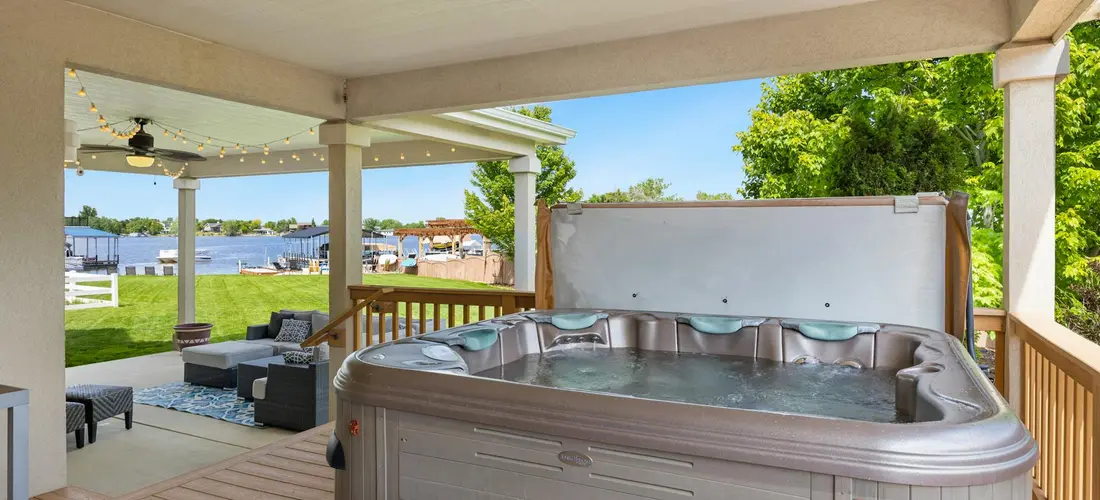
Seasonal cycling means you completely power down and drain your spa for weeks or months, usually when you know you won’t be using it. The best time for a full shutdown is when consistent freezing temperatures are on the horizon or before a long summer vacation. I target late fall here in Dallas, once the nightly dips below 40°F become regular.
Key Benefits of a Seasonal Shutdown
Turning everything off isn’t just about saving a few bucks. A proper seasonal shutdown gives your equipment a much-needed vacation from the constant hum of the circulation pump. This extended break can significantly prolong the life of your heater, pump seals, and control board.
- Slash Energy Bills: With the heater and pumps off, your monthly electricity use plummets to zero for the tub.
- Reduce Chemical Use: No water to treat means no buying sanitizer, shock, or balancers for months.
- Minimize Maintenance Time: You trade daily checks and weekly balancing for one major shut-down and start-up chore.
- Prevent Cold-Weather Runaways: If a power outage hits in a deep freeze, a winterized tub is safe, while a running one risks a frozen and cracked plumbing disaster.
Potential Pitfalls of Seasonal Operation
This approach isn’t without its headaches if done hastily. The single biggest risk is water left behind in the plumbing that freezes, expands, and splits pipes or cracks pump volutes. I’ve repaired more than a few spas where someone just flipped the breaker and walked away.
- Stagnant Water Havoc: Draining isn’t enough; residual water breeds biofilm that smells awful and is tough to purge on restart.
- Extended Dry-Out Damage: Acrylic shells and certain jet gaskets can dry out and crack if the tub sits empty in low humidity for too long.
- The Restart Hurdle: Filling, heating, and re-balancing chemistry from zero is a multi-hour project that requires full attention.
- Missed Small Leaks: A tiny seep you don’t notice during shutdown can cause subfloor rot or shell staining over months of inactivity.
Cost and Energy Showdown: 24/7 vs. Seasonal
Let’s talk numbers. The choice between always-on and seasonal use boils down to your local power rates and how many months you’ll shut down. Running a hot tub 24/7 is like leaving a powerful light on in your backyard, constantly fighting to hold 102°F against the outdoor air. So, is it cheaper to keep a hot tub hot or reheat it before each use? It depends on the situation.
Calculating Energy Consumption for Each Method
Grab your last electric bill to find your cost per kilowatt-hour (kWh). For a rough 24/7 estimate, a modern, well-insulated 300-gallon tub might use 5-7 kWh per day just to maintain temperature, plus more for filtration cycles. Your pumps add to this load. That baseline helps frame the cost discussion. For a deeper look at how much electricity hot tubs use and how energy efficiency can trim those bills, see energy efficiency explained.
- 24/7 Operation: Daily kWh usage x 30 days x cost per kWh = your monthly “always ready” cost.
- Seasonal Shutdown: Energy cost is zero during the off-months. Your only costs are for chemicals used during the active season and the antifreeze for winterizing.
I once metered a client’s older tub that guzzled 12 kWh daily; switching to a seasonal schedule saved them over $60 a month during our mild Texas winter—prove that hot tubs aren’t always expensive to run.
Real-World Cost Comparison and Savings
Let’s compare a six-month shutdown versus year-round operation. If your tub costs $50 a month to run, a half-year shutdown puts $300 straight back in your pocket, minus about $25 for winterizing supplies. That’s a solid net gain when considering all the annual costs of running a hot tub.
| Factor | 24/7 Operation | Seasonal Cycling |
|---|---|---|
| Annual Energy Cost | High ($600+) | Lower (Cost for active months only) |
| Equipment Wear | Constant | Reduced by half |
| Chemical Cost | Year-round expense | Only during use period |
| Your Time & Effort | Consistent weekly maintenance | Concentrated effort at shutdown/restart |
The savings from seasonal cycling are very real, but they come with the upfront labor of a correct winterization. Skipping steps to save an hour can lead to thousand-dollar repair bills.
How to Properly Cycle Your Hot Tub Seasonally
Doing this right is all about removing every drop of water you can. I treat my shutdown ritual with the same care I give to balancing alkalinity to 80-120 ppm-precision prevents problems.
Step-by-Step Guide to Winterizing and Shutting Down
You’ll need a wet/dry vacuum, non-toxic RV antifreeze (the pink propylene glycol type), and a filter cleaner. Always turn off power at the breaker before you start any work inside the equipment compartment.
- Balance your water chemistry one last time, then shock it. This helps clean the plumbing as it drains.
- Drain the tub completely using the bottom drain or a submersible pump. I use a shop vac to suck out the stubborn water in the footwell.
- Remove and deeply clean your filters with a proper filter cleaner, not just a hose. Let them dry completely before storage.
- Blow out the plumbing. Use your wet/dry vac on the blow setting to force air through every jet and the suction lines. You should see mist spray out.
- Add antifreeze. Pour about two gallons of RV antifreeze directly into the plumbing via the filter standpipe and into the footwell jets. This pink fluid is your insurance policy against any leftover droplets freezing.
- Wipe down the shell with a spa cleaner, leave the cover slightly ajar for ventilation, and secure the cover with straps.
Preparing for a Seasonal Restart
When you’re ready to soak again, reverse the process with a focus on purification. The first fill after a long sleep is the most critical for preventing that musty, stale water smell.
- Remove the cover and give the empty shell a good scrub with a mild, non-abrasive cleaner.
- Reinstall your clean, dry filters. I always keep a spare set rotated in so one is always bone-dry and ready.
- Fill the tub through the filter compartment if possible, which helps purge air locks. Use a pre-filter on your hose to keep metals out.
- Turn power back on. Prime the pump by opening the air relief valve on the filter until a steady stream of water flows.
- Fire up the system and let it heat. Once warm, test and adjust your chemistry aggressively. I shock with a dichlor dose first thing, before anyone gets in, to wipe out any biofilm that survived.
- Run the jets for at least 30 minutes to circulate the fresh sanitizer through every pipe.
That first post-restart soak, with the heat sinking into your muscles and the water perfectly balanced, makes the effort worthwhile. Just take your time and don’t rush the plumbing purge.
Maximizing Efficiency: Settings, Accessories, and Pro Tips

Optimizing Thermostat and Pump Settings
Finding the sweet spot between comfort and cost starts with your control panel. I run my own spa at 100°F-it’s plenty warm for soaking and shaves dollars off the monthly bill compared to a 104°F default. Every degree you lower the thermostat can save you roughly 10% on your heating costs, a simple tweak with immediate impact. For the circulation pump, a 24/7 schedule is non-negotiable for water health, but your main filtration pump needs strategy.
Program two or three filtration cycles per day, each lasting 2-4 hours, to overlap with off-peak energy hours if your utility offers them. The goal is to filter all the tub’s water at least twice daily. I schedule a long cycle overnight when demand is low and a shorter one in the afternoon to keep the water polished, mimicking the natural turnover of a healthy system without constant high-amperage draw.
Essential Accessories for Heat Retention and Savings
Your cover is your first line of defense, but it’s often the weakest link. A quality thermal blanket, or floating spa blanket, is my secret weapon. This thin foam layer sits directly on the water’s surface underneath the main cover.
- Thermal Blanket: Cuts evaporation, the primary cause of heat loss. It can reduce heating costs by up to 30% and drastically slows chemical drift.
- Cover Cap or Conditioner: Sun and weather crack vinyl seals. A UV-protectant spray or a fitted cap extends your cover’s life by years, preserving its insulating core.
- Jet Insulators: These foam donuts slip around jet bodies inside the cabinet, reducing heat bleed into the cold outer shell.
- Cabinet Vents: Ensure they are clear in summer but consider insulating or blocking them with foam board in winter to stop cold drafts from chilling the equipment bay.
Investing in a thermal blanket pays for itself in one season; it’s the most cost-effective accessory you can buy, bar none. I’ve salvaged limp covers by adding one, bringing the sting of rising electric bills back down to a hum.
Troubleshooting Common Cycle-Related Problems
Addressing Heating and Temperature Issues
If your tub struggles to reach temperature, especially during a filter cycle, don’t panic. The first suspect is almost always flow. A dirty filter, a clogged pump impeller, or a stuck diverter valve can all strangle the water movement the heater needs to activate. If the tub still won’t heat after addressing flow, you’ll want to check the heating system next. Our quick guide on hot tub not heating covers common causes and fixes you can try now.
- Check the pressure gauge (if you have one). Is it 5-10 PSI higher than a clean filter reading? That’s your clue.
- Listen. The heater should make a quiet click when it engages. No click often means no flow.
- Feel the pipes. The large pipe leaving the heater should get warm within minutes of the pump starting on high speed.
A heater will lock out on a high-limit error if the water inside it gets too hot from stagnant flow, a safety feature that’s frustrating but prevents a meltdown. Regular filter cleaning is your best defense. If flow is good, the heater element itself might be scaled or failed-a multimeter test for continuity will tell you for sure.
Solving Filtration and Water Flow Problems
Weak or pulsing jets usually point to an airlock or a starving pump. An airlock happens when air gets trapped in the pump’s wet end, often after draining and refilling. Locate the pump union (the big plastic fitting connecting the pump to the plumbing) and loosen it slightly until a steady stream of water gushes out, then retighten. This old-school trick blasts the air pocket out and gets the water moving properly again, a fix I’ve used a hundred times in the field.
For chronic filtration issues, break down your system:
- Filter: Is it truly clean? Cartridge pleats glued together with body oils or calcium don’t count. Soak it in a proper filter cleaner overnight.
- Pump: Is the strainer basket inside the equipment bay clear of debris? A single leaf can obstruct flow.
- Valves: Ensure any diverters for waterfalls or different jet zones are set correctly. A partially closed valve can starve the main filter pump.
Consistent, strong flow is the heartbeat of your spa; when it falters, everything from heating to sanitizing falls apart, so chase down flow issues aggressively. Set a calendar reminder to clean that filter every two weeks-it’s the simplest habit with the biggest payoff for trouble-free cycling.
What People Ask
Is running my hot tub 24/7 necessary for freeze protection in winter?
While continuous circulation is an effective freeze protection method, it is not the only one. A proper, full winterization using a wet/dry vacuum and RV antifreeze provides complete protection and allows you to power down the system entirely. The 24/7 method keeps the system active and consuming energy solely for this purpose, whereas a seasonal shutdown eliminates that energy cost.
Which method is truly cheaper, 24/7 operation or seasonal cycling?
Seasonal cycling is almost always cheaper in terms of direct energy costs, as you eliminate your heating and filtration bill for the months the tub is off. The 24/7 model incurs a constant, predictable cost for the convenience of readiness. Your actual savings depend on your local electricity rates and how many months you maintain a shutdown.
What are the most important accessories for a seasonally cycled hot tub?
Proper shutdown and restart require specific tools. Essential items include a submersible pump for draining, a wet/dry vacuum for blowing out plumbing lines, and non-toxic RV antifreeze. For efficiency during active months, a thermal blanket is critical to reduce heat loss and chemical use, making your runtime more cost-effective.
Does frequently turning my hot tub on and off for seasonal cycles cause more wear than leaving it running?
This is a common misconception. While the restart process is intensive, the extended period of complete rest during a shutdown can reduce overall wear on pumps, heaters, and seals. Continuous 24/7 operation subjects these components to non-stop use, thermal stress, and potential scale buildup, which can lead to a different pattern of wear over time.
How do I ensure my water is safe and clear when restarting after a seasonal shutdown?
The key is a rigorous purge and shock process. After refilling, immediately use a plumbing cleaner or a high initial dose of shock to address any biofilm in the lines. Run the jets extensively on the first heat-up to circulate this cleaner through the entire system before testing and balancing your standard chemistry levels. If you’re planning a hot tub pipe purge system bio flush, time it with this cycle to target hidden biofilm in the piping. Doing so helps ensure the cleaner reaches every corner of the plumbing and makes the flush more effective.
The Unbreakable Routine
Before you slip into that warm, inviting water, give your system a final moment of attention. Run the jets for a full minute-listen to that confident hum and watch the water swirl. Then, dip a test strip to check the balance. I learned this the hard way early in my career; I skipped this step once and the sting of out-of-whack chlorine ruined a perfect evening. This two-minute pre-soak verification is the simplest bridge between maintenance and pure relaxation, catching any last-minute surprises.
All the debate between running constantly or cycling seasonally boils down to one non-negotiable habit. My golden rule, forged from fixing hundreds of pumps and balancing thousands of gallons: log your sanitizer level and pump run time every Sunday without fail. This weekly logbook check creates a crystal-clear history, allowing you to spot a trend-like rising calcium or a struggling pump-long before it becomes a costly, repair-worthy problem, no matter your chosen operating strategy.
You’ve done the hard work, weighed the options, and set your tub’s rhythm. Now, go ahead and sink in for the first 24 hours. The perfect soak awaits.
Further Reading & Sources
- Hot Tub Energy and Electricity Cost | Direct Energy
- How Much Electricity Does a Hot Tub Use? – Payless Power
- How much electricity does a hot tub use? | Jacuzzi®
- Do Hot Tubs Use a Lot of Electricity? | Sundance® Spas
- How much energy does a hot tub really consume? – Tips for saving energy
- Hot Tub Electricity Cost Calculator 2025: Plan Your Hot Tub Usage
Charlie is a hot tub enthusiast with a passion for keeping your jets running smooth and your bubbles bursting with joy. With years of experience in hot tub and jacuzzi maintenance, Charlie knows that a happy tub means a happy you. Whether it’s dealing with stubborn filters or giving your spa a little TLC, Charlie’s here to share expert tips, tricks, and plenty of laughs to help you keep your bubbly retreat in tip-top shape. So, kick back, relax, and let Charlie handle the rest — because no one likes a cranky jacuzzi!
Energy Efficiency