
Why Your Chlorine Stops Working and How Cyanuric Acid Fixes It
If you’re dumping more chlorine into your tub but the water still gets cloudy or smells funky, you’ve likely got a cyanuric acid problem-it’s either too low and letting the sun eat your sanitizer, or it’s too high and locking your chlorine in a useless prison. This isn’t an immediate danger like an electrical fault, but it’s a costly nuisance that wastes chemicals and leads to unhealthy, unwelcoming water.
What You Need:
- A Reliable Test Strip or Liquid Test Kit
- Cyanuric Acid Increaser (Granular Stabilizer)
- Fresh Water for Partial Draining
- 15 Minutes of Your Time
You will learn how to measure, correct, and master this balancing act yourself, saving the service call fee and getting back to a clean, clear soak.
What Is Cyanuric Acid and Why Does Your Hot Tub Need It?
Cyanuric acid, or CYA, is your chlorine’s best friend, but it’s not a cleaner itself-think of it as a stabilizer. Imagine it as a high-SPF sunscreen for your sanitizer, coating each chlorine molecule to protect it from being burned off by the sun’s ultraviolet rays in a matter of hours. Without it, your chlorine is wide open and defenseless.
This stabilizer has three big jobs in your spa water. First, it dramatically slows sunlight degradation, so your chlorine lasts days instead of hours. Second, it extends the effective life of your sanitizer, giving you more consistent protection. Third, by making chlorine more resilient, you’ll use less chemical overall, saving you money and reducing how often you need to test and adjust. To get the most from it, use it properly by following the label directions and keeping your water balanced. For a quick how-to on proper stabilizer use, follow the next steps.
You’re often adding cyanuric acid without even realizing it. The most common source is dichlor shock granules, which are about 50% stabilizer by weight, so every time you shock, you’re boosting your CYA level. Be warned: trichlor tablets, popular for pools, are a no-go for hot tubs; they dissolve too slowly and are far too acidic for our smaller, hotter systems.
I learned this the hard way with my first outdoor tub. I’d get the water perfectly balanced, only to find the chlorine reading at zero by the next afternoon, and that familiar sting was completely gone. I was blowing through shock, frustrated and wasting cash, until another technician clued me in to the missing stabilizer.
The Goldilocks Zone: Ideal Cyanuric Acid Levels
You want your cyanuric acid level just right-not too low, not too high. For indoor spas shielded from the sun, aim for 30 to 50 parts per million (ppm). For outdoor hot tubs, where UV exposure is constant, target a slightly higher range of 50 to 80 ppm to give your chlorine that essential shield. Chemicals are needed to keep hot tubs safe and clean, and their proper use can affect health. When sanitizers and pH levels are balanced correctly, you reduce irritation and microbial risks and help every soak stay safe.
Here’s a quick reference table to show what you’re dealing with when levels drift out of bounds:
| Condition | Primary Effect | Result in Your Tub |
|---|---|---|
| CYA Too Low (<30 ppm outdoor) | Rapid chlorine loss | Unsanitary water, constant chemical addition |
| CYA Too High (>80 ppm) | Chlorine becomes less active | Cloudy water, potential for algae and odors |
What Happens When Cyanuric Acid is Too Low?
When stabilizer is scarce, your chlorine has no armor. The sanitizer burns off so fast you can’t maintain a protective residual, leading to erratic sanitation and a frustrating cycle of re-dosing. You’ll notice you’re adding shock or bleach much more frequently than usual. That’s a telltale sign of sanitizer lock or chlorine lock at work. In the deep dive, we’ll identify the root cause and show how to fix it.
- Symptoms: Chlorine levels plummet within hours on a sunny day. Water may test fine in the morning but be unsafe by evening. You’ll go through chemicals rapidly.
- Causes: High water evaporation and splash-out physically remove CYA. Using only unstabilized chlorine sources, like liquid bleach or lithium hypochlorite, adds no stabilizer to the water.
What Happens When Cyanuric Acid is Too High?
Excess stabilizer creates a problem called “chlorine lock.” The overabundance of cyanuric acid molecules essentially hugs the chlorine too tightly, making it sluggish and ineffective at killing bacteria and breaking down contaminants. Your water can look hazy and feel less fresh, even with normal chlorine readings.
- The Core Issue: Bound chlorine loses its punch, allowing algae and cloudiness to take hold. It’s why you might see people with perfectly balanced pH and chlorine still battling green water.
- The Compounding Effect: High CYA demands you maintain a much higher free chlorine level. As a rule of thumb, your free chlorine should be at least 7.5% of your CYA level. So, at 100 ppm CYA, you need 7.5 to 10 ppm free chlorine to be effective-a level that’s harsh on skin and suits.
Testing Your Hot Tub’s Cyanuric Acid Accurately
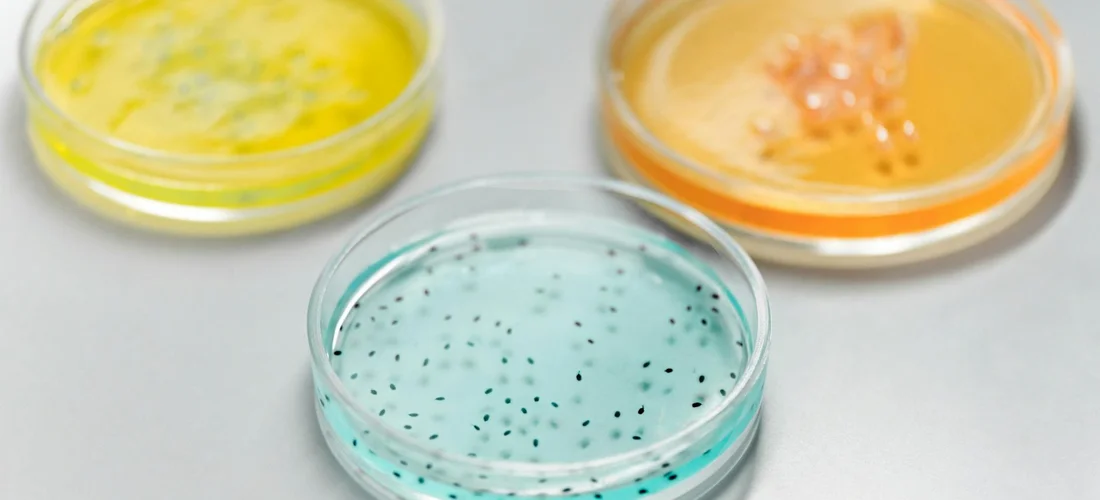
Getting a true read on your stabilizer level is the first step to control. Think of test strips as a quick glance at your speedometer, while a liquid test kit is like putting your car on a dynamometer for a precise measurement.
- Compare test methods head-to-head. I keep test strips in my kit for a daily “good-to-go” check, but for CYA, I always reach for my Taylor K-2006 liquid reagent kit. The strips can ballpark it, but the liquid test, where you watch for a cloud point in the view tube, gives you a reliable part-per-million number you can bank on.
- Master the step-by-step liquid test. 1. Dip your sample bottle about 18 inches deep, away from any jets, to get a representative sample. 2. Follow the kit instructions to the letter-this isn’t a time for improvisation. 3. Read the result in bright, natural light, turning the view tube against a plain background until the black dot just disappears.
- I learned this the hard way: a client’s water felt harsh and the chlorine never lasted, but their strips said everything was “fine.” A liquid test revealed CYA was over 150 ppm. Test weekly with your other chemistry checks to catch trends early. That steady hum of the circulation pump means nothing if the water chemistry is a secret.
How to Lower Cyanuric Acid in Your Hot Tub
When CYA climbs too high, you can’t chemically wish it away. The only cure is fresh water. It’s a simple law of dilution.
- Outline the only effective method: partial drain and refill. If your CYA is 100 ppm and you want 50 ppm, you need to replace half your water. Draining 25% lowers it by 25%, draining 50% cuts it in half. The math is straightforward and non-negotiable.
- Give the safe, DIY steps. 1. Turn off power at the breaker-safety first with electricity and water. 2. Drain your calculated portion (25-50%) using your spa’s drain valve or a submersible pump. 3. Refill with cold, fresh water from the hose, pre-filtered if you can. 4. Here’s the kicker: you must rebalance pH, alkalinity, and sanitizer completely after the refill. The new water is a blank slate.
- I’ve tried those bottled “reducer” chemicals in a pinch. Warning: chemical reducers sold for pools are not reliable for small-volume spas and can introduce phosphates or other imbalances, creating a whole new problem. Save your money and just do the water exchange.
How to Raise Cyanuric Acid in Your Hot Tub
If your chlorine burns off too fast under the sun, a little stabilizer is your friend. But adding it is a lesson in patience and precision.
- List your two source options. You can use pure, 100% cyanuric acid granules or dichlor shock, which is about 50% sanitizer and 50% CYA. For a targeted boost, pure granules are best. To raise CYA by 10 ppm in a 400-gallon tub, you’ll need about 0.7 ounces of pure stabilizer-always calculate based on your tub’s volume and current test result.
- Provide the careful addition steps. 1. Never dump granules directly into the tub. I dissolve them in a bucket of warm water from the spa first. 2. With the pump on high, pour the solution slowly into the skimmer or over a return jet for even distribution. 3. Let it circulate for a full 24 hours before you retest. Stabilizer dissolves slowly and won’t show up on a test right away.
- My rule from fixing many cloudy tubs: Add stabilizer slowly-you can always add more, but draining is the only fix for an overdose. It’s far easier to nudge the level up over a week than to deal with a 120 ppm “lock-out” situation next month.
Cyanuric Acid’s Role in Total Water Balance

Think of your hot tub’s water balance like a recipe. Too much of one ingredient throws the whole dish off. Cyanuric acid is that potent spice; a little protects your sanitizer, but a heavy hand makes everything else harder to manage. High CYA locks up your chlorine, making it sluggish and ineffective, which forces you to use more chemicals to get the same cleaning power. This imbalance can make maintaining proper water chemistry a real challenge.
This imbalance creates a chain reaction. Elevated CYA can buffer your water so much that pH adjustments become frustratingly slow and imprecise. Furthermore, if your calcium hardness is also climbing, the two together become a scale-forming partnership, leaving crusty deposits on your heater and shell.
The Correct Balancing Sequence
You can’t build a house starting with the roof. Follow this order every time you test and adjust your water for stable, comfortable soaks.
- Adjust Cyanuric Acid to 30-50 ppm. If it’s high, partial draining is your only fix. Get this right first.
- Correct Total Alkalinity to 80-120 ppm. This is your pH’s stability foundation. Get it stable before touching pH.
- Set pH to the ideal 7.2-7.8 range. With TA set, pH should settle in nicely with minimal adjustment.
- Ensure Calcium Hardness is between 150-250 ppm. This protects your tub’s surfaces from corrosion or scaling.
Here’s a pro move: use a non-stabilized shock like potassium monopersulfate (MPS) for your weekly oxidizing boost. MPS shock burns away organic waste without adding a single ppm of cyanuric acid to your water, giving you crucial control over CYA creep.
Pro Maintenance Habits for Stable Cyanuric Acid
Managing CYA isn’t a one-time fix; it’s a rhythm. I learned this after a season of dichlor-only use left my chlorine weak and my water dull. The hum of the circulation pump was working overtime for no gain. Establishing simple, proactive habits is the difference between constant chemical battles and effortless weekend soaks.
- Perform a quarterly partial water change, about 25%, to reset dissolved solids and prevent slow CYA climb. Do this even if the water looks clear.
- Always pre-filter your fill water with a standard garden hose filter. It strips out metals, minerals, and sediments that compete for your chemicals and cloud your balance efforts.
- Keep a simple logbook next to your test kit. I use a dated notebook to jot down test results after each check. Spotting a CYA trend from 30 ppm to 45 ppm over a month lets you act before it hits 80 ppm and becomes a crisis.
These habits take minutes but save you weekends. An hour of quarterly preventative maintenance is far cheaper and easier than an emergency drain-and-refill or battling a slimy, out-of-control biofilm overhaul. Your filter, your heater, and your relaxation time will thank you.
Common Questions
Do I need cyanuric acid in my indoor hot tub?
While not as critical as for outdoor tubs, a low level (30-50 ppm) is still beneficial. It protects chlorine from degradation caused by bright indoor lighting and helps stabilize the sanitizer for more consistent performance. However, you must be extra vigilant to prevent the level from climbing too high in an enclosed environment, especially when compared to outdoor tubs.
Can I manage my hot tub using only unstabilized chlorine, like liquid bleach?
Yes, but this strategy requires diligent management and is often best for indoor spas. You will avoid any CYA buildup, but the chlorine will be very fast-acting and can degrade quickly. This means you must test and dose much more frequently to maintain a safe sanitizer level.
What’s the practical difference between using dichlor shock and pure cyanuric acid granules?
Dichlor shock adds both chlorine and CYA simultaneously, making it a convenient two-in-one product for routine sanitation that also builds your stabilizer level. Pure cyanuric acid granules are for raising the stabilizer level only, without adding active chlorine. Use pure granules for precise correction after testing, especially if your chlorine level is already adequate.
If my CYA is high but my water looks clear, can I just leave it?
No. High CYA causes “chlorine lock,” making your sanitizer ineffective even if test strips show a reading. This creates a hidden risk where bacteria and contaminants can thrive in what appears to be balanced water, eventually leading to cloudiness, odors, and potential health concerns. The only fix is a partial water drain and refill.
Are there any substitutes for cyanuric acid in a chlorine-based system?
There is no direct chemical substitute for cyanuric acid’s stabilizing function for chlorine. Your main alternatives are to switch sanitizer systems. You can use bromine, which does not require a stabilizer, or a mineral sanitation system paired with a non-chlorine shock (MPS), which significantly reduces your reliance on stabilized chlorine products.
Preventing a Cyanuric Comeback
After all that testing and adjusting, give your tub a final once-over before you dive in. Fire up those jets for a solid ten minutes-listen to that steady hum-then dip a fresh test strip to confirm your cyanuric acid sits comfortably between 30 and 50 ppm. This last-minute ritual isn’t just busywork; it’s the final safeguard that your chlorine can work effectively and your soak will be both safe and silky. I’ve fixed too many pumps gummed up from chemical imbalance to skip this step.
Your golden rule for taming cyanuric acid is simple: mark your calendar for a monthly test and never let the stabilizer level creep above 50 ppm without planning an immediate partial water replacement.
You’ve navigated the chemistry like a pro. Time to turn off the brain, sink into the warm water, and let the jets work out the last of the day’s tension. Enjoy your perfectly balanced retreat.
Further Reading & Sources
- Cyanuric Acid: Why Your Pool Needs It and How To Balance It
- Fact Sheet on Cyanuric Acid and Stabilized Chlorine Products
- The Free Chlorine and Cyanuric Acid Relationship – Trouble Free Pool | Trouble Free Pool
- Study on the health risk of cyanuric acid in swimming pool water and its prevention and control measures – PMC
- Chlorine, pH and Cyanuric Acid Relationships
- Is The Chlorine In Your Pool Not Functioning As It Should?
Charlie is a hot tub enthusiast with a passion for keeping your jets running smooth and your bubbles bursting with joy. With years of experience in hot tub and jacuzzi maintenance, Charlie knows that a happy tub means a happy you. Whether it’s dealing with stubborn filters or giving your spa a little TLC, Charlie’s here to share expert tips, tricks, and plenty of laughs to help you keep your bubbly retreat in tip-top shape. So, kick back, relax, and let Charlie handle the rest — because no one likes a cranky jacuzzi!
Water Chemistry