
Stop Tripping Over Your Hot Tub: The 3-Step Deck Design Fix
Is your hot tub perched on a wobbly platform or crammed into a corner? Do guests hesitate to step out onto dark, slippery boards? You have a fundamental design error. Ignoring the trio of layout, materials, and lighting doesn’t just ruin the vibe-it creates a real fall hazard and drains your wallet with premature replacements.
What You Need:
- A tape measure and a rough sketch of your yard
- Hard facts on composite versus wood durability
- 30 minutes to audit your current space and lighting
I’ll show you how to build a safe, stunning deck that fits your life perfectly, and you won’t need to call a contractor.
Why Your Deck is Your First Line of Hot Tub Defense
Think of your deck not just as a platform, but as a shield. A proper foundation does more than look good-it actively fights the daily battles that wear your spa down. From my own missteps, I’ve learned a neglected base invites a world of trouble straight into your plumbing.
A well-designed deck keeps leaves, dirt, and lawn clippings from becoming a soggy paste against your cabinet vents, which starves your pump of crucial cooling air and clogs your filters twice as fast. It elevates your tub away from ground moisture and pests; I’ve pulled more than one fried circuit board from a cabinet that sat directly on damp soil.
This barrier also creates a safe, clean perimeter for maintenance. You’re far less likely to skip checking the drain valve or wiping down the shell if you’re not kneeling in mud or mulch. Your deck is your partner in the long-term care of your investment.
Planning Your Layout: Space, Access, and Serviceability
This is where the real work happens before a single board is cut. A good layout makes every future task easier, from a simple water test to a major pump replacement. Let’s break it down into three manageable steps.
Step 1: Measure for More Than Just the Tub
Your hot tub’s footprint is just the beginning. You must create a “service envelope” around it. Open your owner’s manual right now and find the page showing the required service clearance—usually 18 to 24 inches on the side with the equipment panel. For a safe and accessible setup, you also need ample space around all sides for maintenance and airflow. We’ll outline the full total clearance requirements and where to find your model’s specifics in the next steps.
This clearance is non-negotiable; without it, a simple $150 heater replacement can turn into a $500 ordeal requiring partial deck disassembly. Also, account for the swing radius of your cover lifter and the footprint of any steps. I recommend a minimum of 12 inches of clear deck space on all other sides for safe walking and cleaning.
Step 2: Choose a Location That Saves You Headaches
Look up, down, and around. Avoid placing your tub directly under trees; pine needles and sweet gum balls are notorious for slipping past covers and dissolving into a sticky mess. Consider the prevailing wind direction-positioning the tub so the breeze doesn’t blow chemical fumes toward your house or seating area is a small trick with big comfort payoffs. If you’re weighing the pros and cons of putting a hot tub under a tree, debris management becomes a key factor. Even with shade, leaves and sap can complicate maintenance, so plan for regular cleaning and protective measures.
Ensure the location has adequate drainage away from the tub’s base to prevent wooden supports from rotting or concrete from staining, and always verify a perfectly level site with a 4-foot carpenter’s level before construction begins. Also, keep the electrical placement requirements for installing a hot tub in mind to ensure safety and code compliance. Proximity to a GFCI electrical source and a water hose will save you money on installation, and don’t forget about privacy and a pleasant view—you’re building a retreat, after all.
Step 3: Design for Safe and Easy Entry & Exit
Slippery surfaces are the single biggest hazard around a spa. Your decking material must have texture, even when wet. I am a huge fan of composite decking with a brushed woodgrain finish; it’s kind to bare feet and provides consistent grip. You can find more tips on preventing slips and falls around your spa.
Plan for integrated features that aid stability. A sturdy, anchored handrail on one or two sides is invaluable. A built-in bench along the edge isn’t just for sitting-it’s a perfect spot to safely sit and pivot into the water. Assessing whether the best hot tub steps include sturdy handrails is a core safety consideration here. That perspective informs how we design the integrated steps and gripping supports. Lighting is a critical safety component here; use low-voltage, wet-rated LED lights to clearly illuminate every step and the perimeter of the tub after dark, preventing missteps.
Choosing Weather-Resistant and Low-Maintenance Materials
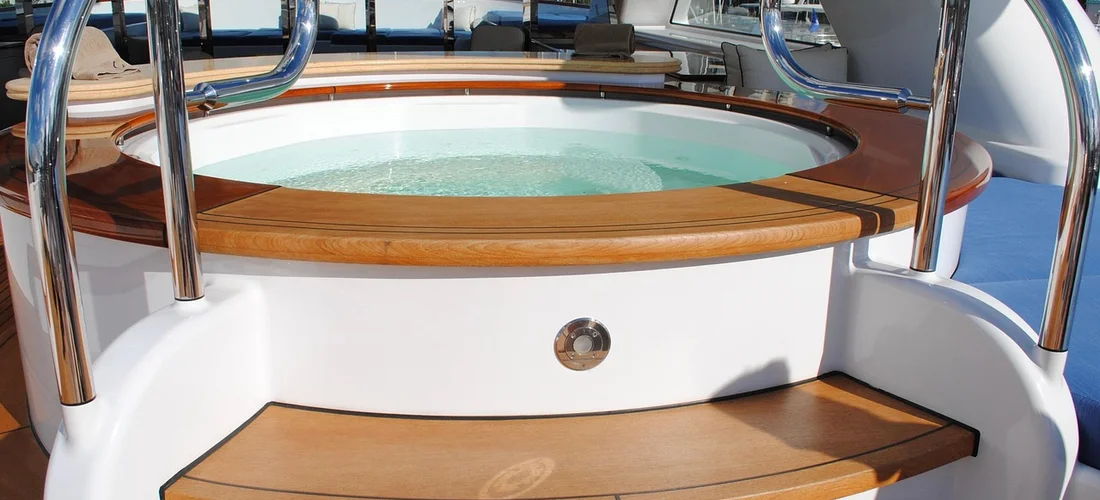
Your deck isn’t just a stage for relaxation; it’s a workbench for maintenance. I’ve knelt on more hot tub decks than I can count, fixing pumps and balancing water. The material under your knees and tools dictates your future workload. Choose wrong, and you’ll be fighting mold, splinters, and decay instead of enjoying a soak.
The Real-World Pros and Cons of Decking Options
Let’s get practical. Every material has a personality and a price tag, both in dollars and weekend hours. Here’s my field-tested breakdown.
- Pressure-Treated Wood: The classic budget choice. It’s affordable and strong, but it demands annual attention. Without a fresh sealant, it will warp, crack, and turn a splintery gray. If you skip the yearly seal, you’re signing up for a full sand-and-restain project in three to five years.
- Composite Decking: My go-to for low-maintenance bliss. Made from wood fibers and plastic, it won’t rot, splinter, or need staining. The trade-off? It can get hot underfoot in direct sun and has a higher upfront cost. Choose a textured board-smooth composites can be slippery when wet with that morning dew or spill from your test kit.
- Tropical Hardwoods (Ipe, Tigerwood): Stunningly dense and naturally rot-resistant. They feel incredible and last decades. The downsides are major: they’re expensive, hard to cut (wear down saw blades fast), and require special oil to maintain their rich color. It’s a luxury, high-commitment choice.
- Concrete Pavers or Stone: Unbeatable for durability and custom looks. They handle water, chemicals, and heavy equipment without a blink. The critical factor is the base; a poorly compacted gravel base leads to shifting and uneven pavers. A perfectly level stone surface makes rolling a filter pump or chemistry cart an absolute dream during maintenance.
Critical Must-Do: Waterproofing and Drainage
This isn’t an optional upgrade. It’s your deck’s life insurance. Chlorine splash, rainwater, and melting snow will find every crack. I’ve seen beautiful decks rot from the inside out because water was trapped against the house framing.
- Slope It Away: Ensure your deck has a slight slope-about a 1/4-inch drop per foot-away from your house and the hot tub’s equipment access panel. You want water to run off, not pool.
- Use a Membrane: For wooden decks, install a waterproof membrane (like a rubberized sheet or specialized coating) on the decking surface before adding your final boards or pavers. It creates a hidden gutter system.
- Plan for the Drain: You will drain your tub 2-4 times a year. Where will 400+ gallons of water go? Never let it pour directly onto your deck or, worse, under it. Use a long drain hose to route water to a landscaped area or drain. A dedicated deck drain installed during construction is a pro move.
Hot Tub Deck Lighting for Safety and Evening Care
Lighting transforms your deck from a daytime space to a 24-hour retreat. But beyond ambiance, it’s a critical safety and maintenance tool. Fumbling with chemicals in the dark is a recipe for a spill or mistake.
Task Lighting for Water Maintenance
This is your functional, no-nonsense light. Its job is to illuminate your test kit vial, the chemical label, and the water’s surface clarity.
- Under-Rail LED Strips: Mounted under the top deck rail, they cast a perfect downward glow on your work area without shining in your eyes.
- Adjustable Spot Posts: Small, waterproof LED spotlights on short posts can be aimed precisely at the hot tub’s control panel and water surface.
- Color Temperature Matters: Choose bright, daylight-style LEDs (5000K-6500K). This white-blue light lets you accurately judge water color, spot cloudiness early, and read those tiny numbers on test strips. The crisp clarity of a 6000K LED beam is the difference between guessing and knowing your alkalinity is off.
Ambient Lighting to Set the Mood
Once the cover is on and the chemicals are balanced, it’s time to soften the mood. This lighting should be indirect, warm, and gentle.
- Step and Riser Lights: These low-level lights define the walking path, preventing trips and falls. They provide just enough glow without killing the night vision.
- Warm String Lights: The timeless choice. Drape them overhead or along a pergola for a magical, festive feel. Opt for commercial-grade, outdoor-rated strings.
- Downlighting from Trees or Structures: Mount fixtures high up in a nearby tree or eave to cast a moonlit wash of light over the whole area. This eliminates harsh shadows and creates a serene environment.
- Pro-Tip for Energy Efficiency: Put all lighting on separate switches or smart zones. With a simple voice command or app tap, you can switch from “Maintenance Mode” (all task lights on) to “Soak Mode” (just the warm ambient glows) in an instant.
Integrating Practical Features for the Hot Tub Owner

Built-In Storage for Chemicals and Tools
Picture this: you’re dripping wet, fumbling with a slippery filter cap while your chlorine jug tips over. Built-in storage solves this messy reality. I learned the hard way after spilling a whole container of pH decreaser on my patio; now I always design a locked, ventilated cabinet right into the deck frame. This keeps chemicals stable, tools handy, and prevents costly replacements from sun damage or moisture.
Choose materials that fight corrosion. Plastic bins can warp, and untreated wood will rot. I use marine-grade polymer boxes or line wooden compartments with a vinyl membrane. Your test strips stay accurate, and you avoid the sting of mishandled acids.
- Dual Compartments: Separate dry tools (wrenches, gauges) from liquid chemicals to prevent accidental contact.
- Shadow Boarding: Outline your filter wrench and skimmer net on the wall so you instantly see if something’s missing after maintenance.
- Childproof Locks: A simple latch keeps curious hands safe from concentrated sanitizers and prevents pets from chewing on hoses.
This isn’t just about neatness. Organized storage means you’re more likely to test your water weekly and catch imbalances early.
Privacy Screens and Windbreaks
A sudden wind can steal the warmth from your soak and your mood. Strategic barriers make your deck a year-round sanctuary. On my own deck, I used interlocking cedar panels to block the north wind; my heater now cycles less, and I hear the water jets, not the traffic. This simple add-on boosts energy efficiency and tranquility.
Your screen material changes the feel. A translucent polycarbonate panel diffuses light for daytime privacy, while a dense trellis with climbing jasmine adds scent and texture. Consider the view from inside the tub, not just from the yard.
- Adjustable Louvers: You can angle slats to block sightlines while still allowing gentle airflow.
- Roll-Down Canvas: A cost-effective DIY windbreak you can deploy only on brisk evenings.
- Structural Integration: Bolt screens directly to deck posts for stability, ensuring they can handle a strong gust without rattling.
The right screen does more than hide you; it creates a microclimate that retains heat and muffles sound for a truly immersive experience.
Ongoing Deck Care to Protect Your Hot Tub
Regular Cleaning to Prevent Contamination
Your deck is the biggest dirt highway to your hot tub water. Pollen, bird droppings, and tracked-in grass create a feast for algae and bacteria. I set a calendar reminder to clean my deck every two weeks; this habit alone cut my chlorine use by nearly twenty percent. A clean surface means less gunk washes in when you get out or during a rainstorm. This habit is a solid step toward a greener, more sustainable hot tub. In the next steps, you’ll find 7 ways to make your hot tub more eco-friendly and sustainable.
Skip the bleach and opt for a cleaner designed for your deck material. For composite, I mix a gallon of warm water with a squirt of dish soap and a cup of white vinegar. The vinegar dissolves mineral dust without harming the spa shell below. Scrub with a soft-bristle brush and rinse thoroughly.
- Clear everything off the deck, including mats and planters.
- Pre-soak the area with a garden hose to loosen debris.
- Apply your cleaning solution section by section, agitating any stubborn spots.
- Rinse from the deck’s far edge toward the lawn, guiding runoff away from the hot tub’s equipment bay.
That final rinse is crucial. You want to flush contaminants off the deck, not into your spa’s ventilation louvers.
Annual Inspections for Safety and Structure
Time and weather work silently on your deck’s joints and beams. A thorough once-a-year inspection is your best defense against rot, rust, and risky failures. Every fall, I perform a “step-and-listen” test, walking slowly across the deck to hear for creaks that signal loose fasteners or compromised wood. This proactive check has saved me from two major repairs over the years.
Grab a notepad and a flathead screwdriver. You’re looking for subtle changes. Poke the end grains of posts and joists; soft, spongy wood means dry rot. Shine a light on metal hangers and brackets, searching for the red dust of corrosion.
- Flashing and Ledger Board: Ensure the metal strip where the deck meets your house is intact and sealing out water.
- Drainage Paths: Verify that water still sheds properly from the deck surface and doesn’t pool around the hot tub’s base.
- Handrails and Steps: Shake them firmly. Any wobble means a connection has weakened and needs immediate tightening.
Mark any trouble spots with tape. Addressing a loose board or a popped nail now prevents a tripping hazard or a structural headache later. Your deck is the foundation for your relaxation-keep it solid.
FAQs
Can I incorporate built-in storage or seating into my hot tub deck layout?
Absolutely, and it’s a smart way to enhance functionality. When planning, designate specific zones on your layout sketch for a storage cabinet (near the equipment side for easy access) and a seating bench (on a side with no service clearance needs). Ensure these built-ins don’t encroach on the essential service access corridor or safe walking paths around the tub.
What are the pros and cons of a sunken or recessed hot tub deck design?
A sunken design, where the tub is partially lowered, offers a sleek, integrated look and can make entry easier. However, it complicates construction, often requires more complex waterproofing and drainage, and can severely limit future access to the spa’s equipment panel for repairs. It’s best approached with a detailed plan and professional advice to avoid creating a maintenance nightmare.
How do I best connect a new hot tub deck to my existing house deck?
The key is to treat the hot tub area as its own structurally independent platform, even if visually connected. A deck support hot tubs weight structural assessment can guide the design to ensure the structure safely bears the load. It must be built to handle the immense weight and moisture, which often exceeds standard deck specifications. Use a proper ledger board or footing system to attach the new section, and ensure the entire combined structure has adequate slope for water to drain away from your home’s foundation.
Is a multi-level deck layout a good idea for a hot tub?
A multi-level design can be excellent for defining spaces, such as separating the wet hot tub area from a dry lounging or dining space. It’s particularly useful on sloped yards. On sloped ground, a level hot tub setup is essential to prevent uneven stress and settling. This usually means a precisely leveled base with properly reinforced framing under the entire footprint. The critical factor is safety: incorporate wide, well-lit steps with secure handrails. The level holding the tub must be perfectly flat and have the strongest possible support framing directly underneath the spa’s footprint.
What are the essential safety features to factor into my deck’s layout?
Beyond non-slip decking, plan for integrated safety elements from the start. This includes allocating space for anchored handrails on at least one side of the steps and potentially the tub itself. This naturally connects to a guide on choosing the best hot tub handrail for safety and accessibility. It can help you compare recommended mounting options, heights, and grip designs. Your layout should also ensure there’s clear, unobstructed space for a cover lifter to swing open fully and for safe, stable stepping points when exiting the tub onto the deck surface.
The Final Touchdown
Before you light the tiki torches and call the neighbors, there’s one last play to run. Walk your deck. Feel the texture under your bare feet-is it smooth and splinter-free? Open and close the hot tub cover a few times, listening for the gentle sigh of a perfect seal. Now, fire up the jets. Watch the water swirl, listen for that confident hum from the equipment bay, and scan the fresh wood or composite for any stray drips. This five-minute sensory check is your final defense against surprises, ensuring your first soak is pure celebration, not troubleshooting.
Your beautiful new deck is a stage for relaxation, but the elements are always waiting in the wings. Sun, water, and temperature swings will test your materials every single day. The single most powerful habit you can build is a monthly visual inspection. Run your hand along the railings and step edges. Look for lifted fasteners, subtle warping, or any dark spots that signal trapped moisture. Catching a loose board or a small area of mildew early transforms a 10-minute fix into a weekend-saving rescue, preserving your deck’s beauty and safety for years.
You’ve planned, measured, and built not just a platform, but a destination. The work is done. The lights are strung. The water is waiting. Now go enjoy that well-earned soak-you’ve built the stage, and the main event awaits.
Further Reading & Sources
- 40 Best Deck Ideas for your Spa | wooden deck with built-in …
- Construction Details on Hot Tub Deck Design. Loads Calculated
- Hot Tub Deck Design: Must-Know Tips & Ideas
- Hot Tub on a Deck: Pro Tips and 20 Ideas – Trex RainEscape
- r/Decks on Reddit: Hot Tub Deck plans. Is it strong enough?
- 56 Best sunken hot tub ideas
Charlie is a hot tub enthusiast with a passion for keeping your jets running smooth and your bubbles bursting with joy. With years of experience in hot tub and jacuzzi maintenance, Charlie knows that a happy tub means a happy you. Whether it’s dealing with stubborn filters or giving your spa a little TLC, Charlie’s here to share expert tips, tricks, and plenty of laughs to help you keep your bubbly retreat in tip-top shape. So, kick back, relax, and let Charlie handle the rest — because no one likes a cranky jacuzzi!
Outdoor Setup