
Stop Installation Disasters: Hot Tub Electrical and Placement Demands Decoded
Published on: January 31, 2026 | Last Updated: January 31, 2026
Written By: Charlie Bubbles
If you’re holding a delivery date but haven’t verified voltage or ground clearance, you’re on the brink of the most expensive backyard mistake. Ignoring foundational electrical and placement specs isn’t just an oversight-it’s an invitation for shock hazards, structural rot, and failed inspections that will empty your wallet. This is a hands-on, safety-critical project; treat every detail with respect.
What You Need:
- Non-contact voltage tester
- 100-foot measuring tape
- Your local municipal building code pamphlet
- A clear afternoon for site prep
Grab your tools-I’ll show you how to meet every code and clear every hurdle on your own.
Understanding Hot Tub Electrical Demands
Voltage and Amperage: The Power Behind the Jets
Think of your hot tub’s electrical system like its bloodstream—it needs the right pressure and volume to thrive. Most modern tubs run on a 240-volt system, which delivers power more efficiently than a standard 120-voltage plug. That 240V system lets your heater and jets work together without straining, giving you that deep, massaging soak. The 120V “plug-and-play” models exist, but they often struggle to heat and run jets simultaneously, leaving you in lukewarm water on a cold night. From my toolbox to yours, always wire for 240 volts; it’s the reliable choice for consistent performance and energy efficiency. To put it plainly, hot tub electrical requirements 110v vs 220v explained helps you decide which setup fits your home. Knowing this helps you plan wiring, breakers, and heater capacity with confidence.
Amperage is the measure of current flow, and your tub’s manual will specify the need—commonly 50 or 60 amps. This isn’t a guesswork game. A 50-amp circuit might power a basic model, while 60 amps handles larger pumps and fancy lighting. Skimp on amperage, and you’ll hear the dreaded click of a tripping breaker right when relaxation is about to begin. To help you navigate this, a detailed guide on how many amps a hot tub uses breaks down common model ranges and explains why bigger spas often demand 60 amps. It also covers safety considerations, breaker sizing, and what to ask a pro when sizing your circuit.
- Wire Gauge is Critical: For a 50-amp, 240V run, you’ll need 6 AWG copper wire. It’s thick, it’s durable, and it handles the load without overheating. For longer distances, an electrician might jump to 4 AWG.
- Conduit Protects Your Investment: Run that wire through schedule 80 PVC conduit or rigid metal conduit underground. It shields against moisture, curious critters, and accidental shovel strikes.
- The Dedicated Circuit is Law: Your hot tub must have its own circuit breaker in your main panel. Sharing a circuit with patio lights or a garage fridge is a surefire path to failure and a safety hazard.
GFCI Protection: Your Lifesaving Circuit
A GFCI (Ground Fault Circuit Interrupter) is the silent guardian of your soak. It constantly monitors the current flow. If it senses even a tiny mismatch-like electricity leaking into the water-it shuts off the power in a fraction of a second. I will never install a tub without one; it’s the single most important electrical safety device, bar none.
The code requires a weatherproof service disconnect, usually a GFCI breaker box, placed within clear sight of the tub but at least 5 feet away. This lets you kill all power instantly for maintenance or in an emergency. Seeing that disconnect within arm’s reach gives you peace of mind every time you step in.
Grounding and bonding are the unsung heroes that prevent “stray voltage”—a tingle you might feel in the water. Bonding connects all the metal parts (the shell, pump, heater) together with a solid copper wire, creating a common ground path. In hot tub safety terms, understanding bonding vs grounding helps you see how bonding keeps metal surfaces at the same potential while grounding provides a path to earth for fault currents. Proper bonding ensures any fault gets safely directed into the earth, not into you.
The Heart of the System: Wiring to the Control Panel
This is the final connection where precision matters. You’ll run your outdoor-rated cable through the conduit to a waterproof entrance point on the spa’s control pack. Use a liquid-tight connector to seal out moisture. A single drip inside the panel can lead to corrosive damage and a costly control board replacement.
- Plan your conduit route from the disconnect to the spa, avoiding sharp bends.
- Feed the pre-measured wires through, leaving enough slack for a service loop at the tub.
- At the spa pack, strip the wires carefully and connect them to the labeled terminals: typically black and red for hot, white for neutral, and green for ground.
- Double-check every connection is tight and secure before powering up.
I advocate loudly for hiring a licensed electrician for this hookup. The cost is worth it for certified work, proper permits, and the assurance that your family’s oasis is built on a safe, code-compliant foundation. I’ve fixed too many DIY jobs where reversed wires fried a heater on the first test fire.
Choosing the Right Spot: Placement Essentials
Clearance and Access: Room for Fun and Repair
Give your tub room to breathe. Crowding it against a wall might look neat, but it turns a simple filter change into a yoga contortion. You need physical and electrical clearance. Leaving space isn’t just about aesthetics; it’s about making future repairs manageable and affordable.
- Keep the tub at least 5 feet from any house wall or permanent structure to meet electrical code and allow air circulation.
- Maintain a 10-foot minimum clearance from any overhead power lines or tree branches.
- Ensure at least 24 inches of clear access on the side with the equipment panel-and ideally on all sides. That’s the space you’ll need to pull a pump or fix a leak.
Remember, a technician’s hourly rate starts the moment they arrive, and easy access keeps your service bill down. I’ve spent hours dismantling decks just to reach a simple valve, a cost the owner never anticipated.
Drainage and Slope: Keeping Water Where It Belongs
Water is your tub’s friend, but not under its base. A level pad is a good start, but a very slight slope—about 1/4 inch per foot—away from the spa is better. This subtle grade directs splash-out and rain away, preventing erosion that can undermine the tub’s solid support.
Think about your yard’s drainage pattern. You don’t want a spring thaw or heavy rain channeling water under your tub’s foundation. Integrating your site with existing drainage, like a French drain or gutter downspout extension, saves you from a muddy, unstable mess later. I’ve seen perfectly good pads washed out because they became the lowest point in the yard.
Privacy and Practicality: Thinking Beyond the Basics
Consider your microclimate. A spot sheltered from prevailing winds makes winter soaks more comfortable and reduces heat loss. Track the sun’s path; morning sun can help melt frost off the cover, while afternoon shade prevents cover fading. Strategic placement based on sun and wind directly boosts your energy efficiency and enjoyment.
Privacy screens or landscaping can create a sanctuary, but avoid planting deciduous trees directly overhead-falling leaves are a filter’s worst enemy. Finally, be practical: site your tub within hose reach of a water source for easy filling, and have a plan for emptying, whether to a storm drain or a distant garden bed. Draining 400 gallons across your lawn once a year is a task you’ll thank your past self for planning.
Building a Solid Foundation
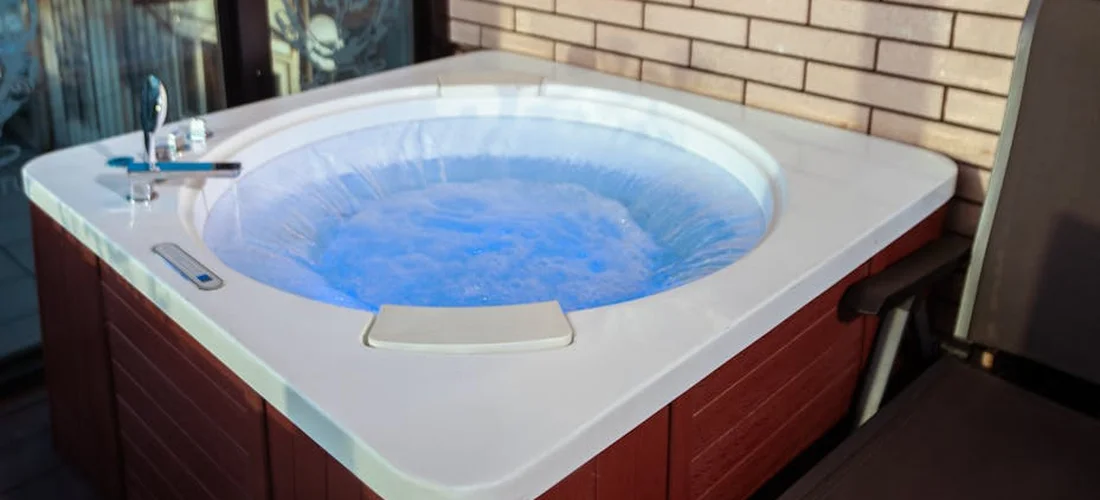
Think of your hot tub’s foundation as its spine—if it’s weak or uneven, everything else aches. A solid base prevents shell cracks, plumbing leaks, and that irritating wobble every time you climb in. By keeping the base level, you can avoid most common hot tub problems later. That proactive step also saves you from costly repairs and downtime.
Load-Bearing Options: From Concrete to Pavers
Your choice here balances cost, effort, and permanence. I’ve seen too many sagging corners from skimpy bases; always err on the side of overkill.
- Poured Concrete Pad: My top pick for permanence. Pour a slab at least 4 inches thick with fibermesh or rebar reinforcement, targeting a compressive strength of 3,500 psi or higher. It resists frost heave and gives a perfectly flat, monolithic surface.
- Reinforced Patio Stones: A great DIY alternative. Use interlocking concrete pavers that are a minimum of 2.5 inches thick, each rated for over 100 psi. Set them on a 4-inch deep bed of compacted, crushed gravel for stability and drainage.
- Engineered Spa Pads: These interlocking plastic grids are fast. Choose pads rated for the full weight of your filled tub-often 5,000 pounds or more. They still require a level, compacted gravel sub-base to prevent shifting.
The Leveling Process: No Room for Wobble
Leveling is a patience game. That faint hum of a happy pump turns into a grumble on a slanted base. Spend an extra hour with the level now to avoid a lifetime of annoying vibrations and uneven water flow.
- Prepare the ground with a long, reliable 4-foot level and a mechanical tamper. Remove all sod and organic matter, then compact the soil until it’s hard and flat. I mark high spots with spray paint and scrape them down.
- After placing your gravel base or pavers, check for level again. Lay the level diagonally and across the center. You should see no gaps; use masonry sand to fine-tune low spots under pavers or pads.
- I can’t stress this enough: never place the tub directly on dirt or grass. Moisture pooling and earthworms will create voids, and you’ll be releveling the whole thing within a season.
Complying with Codes and Getting Permits
This part isn’t bureaucracy-it’s your safety net. Skipping permits or cutting corners on code can lead to electrocution, voided warranties, and a real headache when you sell your home.
NEC and Local Codes: The Rulebook
The National Electrical Code (NEC) Article 680 lays down the law for spas and pools. Your local building department can have stricter rules, so pick up the phone before you pick up a shovel.
- Key NEC rules: A dedicated, GFCI-protected circuit is mandatory-usually 50-amp for 240-volt models. All wiring within 5 feet of the tub must be in conduit, and the GFCI device itself needs to be at least 5 feet from the water.
- Bonding connects all metal components-the heater, pump motors, handrails, even the metal ladder-with an insulated copper wire. This prevents stray voltage, that tingling sensation no one wants.
- Wire size matters. For a 50-amp circuit, you typically need #6 AWG copper wire. If your run from the panel is over 100 feet, you may need to upsize to #4 to avoid voltage drop that starves your heater.
The Inspection Checklist: Passing the Test
An inspector’s visit is your final exam. They’re looking for clear, safe workmanship. Having everything accessible and labeled shows you respect the process and understand the risks.
- The inspector will test the GFCI with a plug-in tester to ensure it trips within milliseconds. They’ll check that the disconnect box is within line-of-sight but at a safe distance.
- They’ll verify the correct wire gauge is used, all connections are tight with proper wire nuts, and that the bonding grid is continuous and securely attached to every required point.
- Here’s a story from my toolbox: I once helped a friend who failed his inspection because he used standard PVC conduit above ground. The inspector pointed out it wasn’t UV-resistant Schedule 80; sunlight had made it brittle. We had to re-run 40 feet of line, a costly weekend lesson.
The Installation Process: A Safe Approach

Pre-Installation Checklist
Rushing this stage is the fastest way to turn a weekend project into a month-long headache. I learned this the hard way when a client’s tub arrived with a cracked skirt because we didn’t inspect the delivery pallet. Follow this list in order.
-
Verify all parts are present and foundation is ready. Lay your hands on every jet, union, and seal before the tub is positioned; a missing 2-inch PVC coupling once cost me a whole afternoon running back to the supplier. Your foundation must be perfectly level and capable of holding over 100 pounds per square foot-I use a 4-inch thick concrete slab or engineered deck blocks for permanent stability.
-
Ensure electrical sub-panel or circuit is installed and permitted. Never, ever skip the permit; it’s a legal safeguard that ensures an inspector verifies the GFCI breaker and correct wire gauge for you. From my experience, this 50-amp dedicated circuit with #6 AWG copper wire is non-negotiable for safe operation and preventing fire hazards.
-
Plan the path for plumbing and conduit. Map out the shortest, most direct route from your main panel to the spa pack, keeping conduit at least 5 feet away from any water lines to avoid condensation issues. Leave enough slack for future service, because digging up a finished patio to access a conduit is a brutal job I’ve had to do.
Mechanical and Electrical Hookup Steps
This is where your prep work pays off. Having a second pair of hands is critical for positioning the shell without straining your back or damaging the acrylic. Follow these steps precisely.
-
Position the tub on the foundation with help. Use PVC pipes as rollers to gently guide the spa into place, checking for level in both directions with a 4-foot carpenter’s level. Even a half-inch slope will cause water to pool on one side and strain the pump.
-
Connect the waterproof conduit to the spa pack. Use liquid-tight flexible conduit (LFNC) for the last 6 feet to absorb vibration from the pumps and prevent wire fatigue. I always seal the entry point with a silicone-based duct sealant to block insects and moisture.
-
Make final wire connections inside the control panel (by electrician). This is not a DIY moment unless you are a licensed professional; 240 volts can be lethal if the hot, neutral, and ground wires are landed incorrectly. I watch for the electrician to torque the lugs to the manufacturer’s specification, usually 25-30 inch-pounds.
-
Perform a pre-fill check of all unions and seals. Hand-tighten every jet face and pump union, then give them a final quarter-turn with a strap wrench-over-tightening cracks the plastic, under-tightening guarantees a leak. Look for the manufacturer’s alignment marks on the fittings to ensure they’re seated properly.
Budgeting for Costs and Ongoing Efficiency
Upfront Installation Costs
Surprise costs kill projects. Get three written quotes from electricians and factor in the price of materials, which can fluctuate wildly. Here’s a typical breakdown based on my recent jobs in suburban areas.
-
Break down typical costs for electrician labor, materials (wire, conduit, breaker), and permit fees. Expect to pay $800-$1,500 for professional installation: $500-$900 for labor, $200-$400 for 50 feet of #6 wire and conduit, and $50-$150 for the GFCI breaker and local permit fees. The permit fee is your cheapest insurance policy.
-
Compare DIY vs. professional electrical cost scenarios. While DIY might save you $500 on labor, a single wiring error can fry a $600 control board or void your spa’s warranty, costing you thousands. I only recommend DIY if you have formal electrical training and can confidently pull the permit yourself.
Long-Term Energy Use and Savings
The monthly bill doesn’t have to sting. Heat loss is your enemy, and a quality, intact cover is your first line of defense, trapping warmth like a thermos. Small habits create big savings.
-
Explain how a well-insulated tub and proper cover reduce monthly electrical cost. A full-foam insulated shell with a 4-pound density cover can cut your heating costs by 60% compared to a basic thermal blanket, especially in climates with freezing winters. I test my cover’s seal yearly by placing a dollar bill halfway under it; if it slides out easily, it’s time for a replacement.
-
Tip: Use a dedicated spa timer to heat during off-peak hours. Programming your tub to heat only during the night, when utility rates are lower, can shave $15-$30 off your monthly electric bill without sacrificing ready-to-use warmth. I set mine for a two-hour warm-up cycle before my usual soak time.
Common Questions
What are the standard electrical requirements for installing a hot tub?
Most hot tubs require a dedicated, GFCI-protected 240-volt circuit. Common amperage is 50 or 60 amps, which necessitates specific, thick wiring like 6 AWG copper run in conduit. A licensed electrician must perform this installation to ensure all connections, grounding, and bonding meet the strict National Electrical Code (NEC) for safety.
How much does professional hot tub electrical installation cost?
Costs vary by region and project complexity, but you can generally expect to pay between $800 and $1,500. This includes labor, materials (wire, conduit, GFCI breaker), and permit fees. While DIY might seem cheaper, errors can damage the tub’s expensive components and void warranties, making professional installation a valuable investment. If you want a detailed breakdown of hot tub wiring costs, it typically breaks down into materials, labor, and permit fees. Understanding these line items helps you compare quotes more effectively.
What does the NEC (National Electrical Code) require for hot tubs?
NEC Article 680 mandates several critical safety measures. These include a dedicated GFCI-protected circuit, proper bonding of all metal parts, a disconnect within sight of the tub (but at least 5 feet away), and the use of correct wire gauges. Your local codes may be even stricter, so always check with your building department.
What is the average monthly electrical cost to run a hot tub?
Monthly costs depend on climate, usage, and your tub’s efficiency, but typically range from $20 to $50. The biggest factor is heat loss. You can significantly reduce this cost by using a high-quality, well-sealed insulating cover and programming the heater to run during off-peak utility hours with a timer. For more detailed information, see how much electricity a hot tub uses and tips on costs and energy efficiency.
Do I need to hire an electrician for hot tub electrical installation?
Yes, hiring a licensed electrician to install a hot tub is strongly recommended and often legally required. They ensure the installation is code-compliant, safe, and properly permitted. This protects you from severe shock hazards, prevents damage to your hot tub’s electrical system, and is necessary to pass the final inspection for legal operation. Curious about whether you need an electrician to install a hot tub? Our complete guide answers that question and walks you through permits, costs, and steps.
The 7-Day Check
Before you sink into that first glorious soak, power up the tub and let it run through a full cycle. Listen for the steady hum of the circulation pump and watch the jets for strong, even flow. This final test isn’t just a formality-it’s your chance to spot a slow leak from a loose union or feel for a weak jet that points to an airlock, preventing a minor issue from becoming a major repair. Feel the cabinet for unusual heat and sniff for the sharp tang of an electrical short. Safety isn’t a one-time step; it’s the last gate before paradise.
From my time wrestling with conduit and balancing water on unlevel pads, one habit stands above the rest. Once a season, physically check that your hot tub is perfectly level and that no soil or mulch has washed against the side panel, compromising ventilation and inviting moisture into the electrical bay. A simple carpenter’s level can prevent the slow, expensive death of your pump and heater.
You’ve navigated amps, clearances, and perfectly mixed mortar. The hard part is over. Now, go turn on the bubbles and finally get wet. Enjoy the soak.
Further Reading & Sources
- How-To Guides | How to Wire a Spa for 120V or 240V – SpaDepot.com
- Wiring a hot tub: Your guide to electrical requirements |
- Hot Tub Installation Guide: Wiring & Breaker FAQs
- 2025 Hot Tub Electrical Installation Cost Guide | Angi
- Electrician’s estimates for wiring 240 to tub?
- r/hottub on Reddit: Wiring a hot tub
Charlie is a hot tub enthusiast with a passion for keeping your jets running smooth and your bubbles bursting with joy. With years of experience in hot tub and jacuzzi maintenance, Charlie knows that a happy tub means a happy you. Whether it’s dealing with stubborn filters or giving your spa a little TLC, Charlie’s here to share expert tips, tricks, and plenty of laughs to help you keep your bubbly retreat in tip-top shape. So, kick back, relax, and let Charlie handle the rest — because no one likes a cranky jacuzzi!
Outdoor Setup