
Stop Crowding Your Hot Tub: Clearance Requirements Fixed in 3 Steps
If you’re squeezing past patio furniture to get in or can’t easily open the side panel for a filter change, you have a critical space problem. Insufficient clearance isn’t just a nuisance-it’s a safety hazard that risks electrical faults, personal injury, and voids most manufacturer warranties. From my toolbox to your backyard, I’ve seen how tight fits lead to costly repairs; this needs your immediate attention.
What You Need:
- A 25-foot tape measure
- Painter’s tape or chalk
- A 4-foot level
- 30 focused minutes
I’ll show you exactly how to measure and map your tub’s safe zone, so you can relax without ever needing a pro.
Why Bother With Hot Tub Clearance? Safety, Service, and Sanity
You might think squeezing your tub into a tight corner saves patio space, but that shortcut costs you more in headaches and repair bills. Proper clearance isn’t just about looks; it’s a vital layer of protection for you, your wallet, and the tub itself. I learned this the hard way early in my career.
First, consider safety. You need clear space to prevent slips on wet surfaces and to allow for a quick exit in any emergency. Electrical panels and conduits require dry, accessible areas for safe operation and to meet building codes. A cluttered perimeter is an accident waiting to happen.
Second, think about service and maintenance. That humming pump will eventually need attention. I once spent three bloody-knuckled hours replacing a circulation pump on a tub crammed against a wooden deck, a job that should have taken forty-five minutes. Without room to wield a screwdriver or see the unions, every repair becomes a nightmare.
Finally, spacing preserves your investment. Trapped moisture against a siding wall or fence causes rot, and a cover that can’t open fully will wear out prematurely. Good airflow around the shell prevents a damp, musty environment where mold and mildew thrive. Giving your tub room to breathe is cheap preventative medicine.
The Absolute Minimum Hot Tub Clearance Requirements
These numbers are your starting point-the bare bones space needed for the tub to function without becoming a hazard. Treat these distances as non-negotiable, especially if you ever plan to do your own repairs. Here is a quick reference table for the critical zones.
| Area | Minimum Clearance | Primary Reason |
|---|---|---|
| Equipment Access Side | 24 to 30 inches | Service access to pumps, heater, and valves |
| Other Sides & Rear | 12 to 18 inches | Cleaning, airflow, and moisture prevention |
| Overhead (Vertical) | 5 to 6 feet clear | Full cover operation and steam dissipation |
Side and Rear Access: Your Service Alley
This is the workspace you’ll be thankful for when something goes click in the night instead of hum. Think of this zone as a mechanic’s bay for your spa’s vital organs.
The Critical Equipment Side Clearance
One side of your tub houses the equipment compartment-this is your main service aisle. You must maintain a full 24 to 30 inches of clear, level ground on this side. This lets you comfortably reach in to:
- Turn the drain valve for winterizing.
- Test or replace the heating element.
- Access the circulation and jet pump unions.
- Reach the control box for diagnostics.
I keep a collapsible toolbox that fits in this space for all my service calls.
General Perimeter Spacing
For the remaining sides and the rear, 12 to 18 inches is the sweet spot. This gap is your defender against silent damage from moisture and blocked access. It allows you to walk around to wipe down the shell, prevents water from splashing against and degrading walls, and promotes crucial airflow that helps the equipment compartment stay cool and dry.
Overhead Clearance: Mind the Roof and Trees
Don’t forget to look up! Steam rises, covers swing open, and branches fall. You need at least 5 to 6 feet of clear height above the fully opened cover to avoid damage and allow steam to vanish safely. Placing a tub under a low eave or patio roof creates a condensation nightmare that drips back into the water and onto the shell. There are pros and cons to putting a tub under a tree—shade and privacy can be nice, but debris and sap require ongoing maintenance. Overhanging trees drop leaves and debris that clog your filters and alter your water’s pH balance with organic tannins.
Navigating Building Codes and Zoning Regulations
Think of local building codes as the rulebook for a safe and legal installation-skip a page, and you might face costly rework. I once helped a neighbor who had to move his entire spa pad six inches after inspection because he guessed on the setback. Do not rely on internet forums or a buddy’s advice for this; a quick, free call to your municipal building department is the only way to get rules tailored to your street. They’ll clarify exactly what you need.
- Setback Distances: Most codes require 5 to 10 feet of clearance from your property line or any structure. This keeps access open for emergency crews and respects neighbors.
- Permit Must-Haves: You’ll likely need separate permits for the electrical hookup and any substantial decking or platform. Getting permits seems like a hassle, but it’s a safety audit that protects your home.
- Pad Specifications: Many codes mandate a noncombustible, stable base like concrete or a specialty spa pad. That wooden deck you love? It often needs engineering approval to prove it can handle the weight and moisture.
Electrical Clearance: A Non-Negotiable Safety Zone
Water and electricity are a dangerous mix, and the clearance rules are your first defense. I’ve seen the aftermath of a DIY job where a stray wire met condensation, and it’s not pretty. If you’re planning to install a hot tub, start by preparing your home’s electrical panel to safely accommodate the added load. This is not a weekend project; all electrical work for a hot tub must be performed by a licensed electrician familiar with local and national codes. Your safety and your warranty depend on it.
GFCI Protection and Disconnect Switch Placement
Your spa’s electrical system has two critical heroes. The GFCI (Ground Fault Circuit Interrupter) acts like a hyper-vigilant guard, cutting power in a fraction of a second if it senses current leaking toward water—think of it as a specialized circuit breaker for wet environments. Then there’s the manual disconnect switch. Codes strictly require this emergency shutoff to be within sight and at least 5 feet away from the tub’s waterline, so you can always reach it without leaning over the water. You should hear a definitive “click” when you test it monthly.
Conduit and Wiring Pathways
The path your power takes matters as much as the destination. Your electrician will run wiring through rigid or flexible conduit for protection. This dedicated pathway must be kept clear of garden edging, irrigation lines, and future landscaping projects that could damage the sheath. A good install keeps conduit routes separate from PVC plumbing lines to prevent any accidental drill-throughs during repairs. Plan for this conduit to have a straight, accessible run back to your main panel.
Planning for Maintenance Access and Drainage
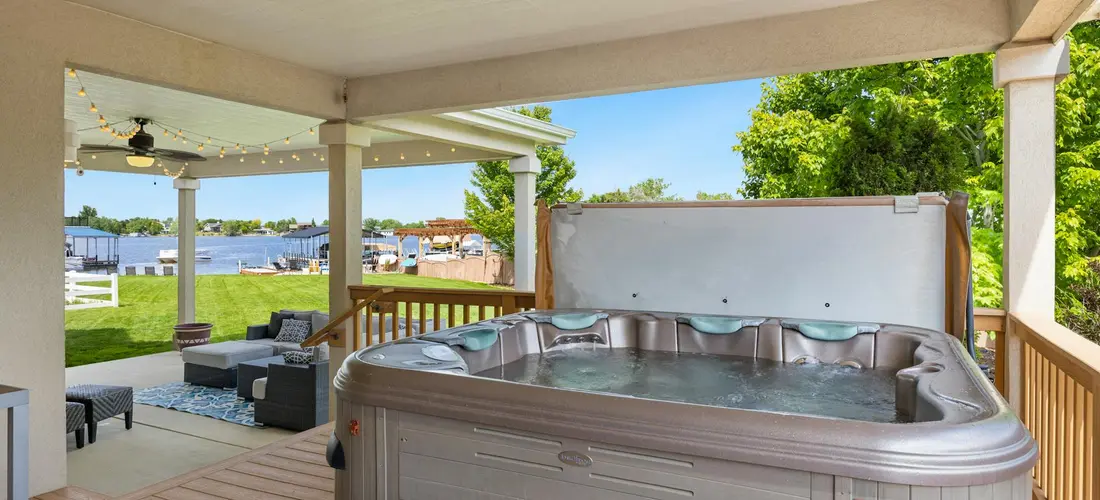
Let’s talk about the most overlooked part of hot tub spacing: making your future life easier. Getting the clearance right isn’t just for looks; it’s the difference between a 10-minute filter swap and an afternoon of swearing and skinned knuckles. Proper access space is the secret weapon for consistent, less frustrating maintenance. If you can’t easily reach every side, those crucial weekly checks will quickly fall by the wayside. Part of getting clearance right is deciding where to place the tub and what should live beneath it. In the next steps, we’ll cover under-tub placement best practices to keep everything level, dry, and easy to maintain.
Leaving Room for Filter Changes and Draining
Picture this: it’s time to clean the filter. You pop the cabinet door and realize you need to be a contortionist to get it out. I’ve been there, wedged between a tub and a fence, and it’s no fun. Here’s how to plan for the two biggest routine jobs.
- Locate the Filter Bay: Before the tub is even placed, know where the filter access is. Most are in the equipment compartment, but some top-load through the skimmer.
- Test Your “Stand and Twist” Zone: You need enough clear space to stand comfortably, pull the filter cartridge straight out (they can be over 2 feet long), and give it a firm twist to break the seal. I recommend a minimum of 18-24 inches of unobstructed front access to the filter bay door.
- Plan the Drainage Route: Your tub has a drain spigot. You need a path for a standard garden hose to run from that port all the way to your chosen runoff area without a sharp kink. An extra 12-18 inches of clearance along that side of the tub ensures you can connect the hose and get good water flow for draining.
Ventilation for Indoor and Enclosed Spaces
Installing a tub inside a sunroom or enclosed porch? This requires serious planning. The warm, chlorinated or brominated water will release moisture and chemical vapors continuously. I’ve seen peeling paint, warped wood, and that distinct “heavy” humid air in poorly ventilated rooms.
- Exhaust Fan is Non-Negotiable: Install a powered exhaust fan rated for high-humidity areas. It should be ceiling-mounted to pull rising moist air directly outside.
- Passive Airflow is Key: Incorporate louvered doors or vented grilles near the floor to allow fresh, dry air to be drawn in as the exhaust fan runs.
- Mind the Materials: Use moisture-resistant drywall (green board or cement board), exterior-grade paint, and waterproof flooring. That pleasant steam is a relentless force.
Without active ventilation, you’re creating a perfect environment for mold and structural damage, not a relaxing retreat.
Optimizing Space: Clever Ideas for Small Decks and Yards
Not everyone has a sprawling backyard. The good news is that with smart design, you can fit a spa into a cozy corner and make the area feel intentional, not cramped. It’s all about multi-functional planning and choosing the right foundation.
Strategic Decking and Recessed Installation
For a sleek, integrated look, building a deck flush with the top of the hot tub rim is a fantastic solution. It creates a seamless patio space. The critical rule: never deck over the equipment access panel. This panel must remain fully removable. Use hinged deck hatches or lift-out sections secured with discreet latches. In designing the perfect hot tub deck layouts, think about materials and lighting to complement the flush look. Subtle lighting and weather-resistant materials boost ambiance and durability.
A semi-inground or recessed install, where the tub is set into a framed pit, can also save visual space and make entry easier. The same access rule applies-the pit must have an open side or removable panels for technicians. When adding privacy screens or planters, place them just outside your marked service clearance zone so they don’t block your ability to work.
Choosing the Right Pad for Your Space
The pad is your tub’s forever foundation. In tight spaces, a perfectly sized, stable base prevents future headaches. It must extend at least 6 inches beyond the cabinet on all sides; 12 inches is better for footing and drainage. It also hinges on the concrete base’s thickness, size, and proper installation. The next steps will link to a concise guide covering thickness, size, and installation.
| Pad Type | Best For | Pro Tip |
|---|---|---|
| Poured Concrete Slab (4″ min. thickness) | Permanent, level installations. Best overall stability. | Use a vapor barrier beneath and a slight slope (1/4″ per foot) for drainage away from the tub. |
| Interlocking Reinforced Pavers | DIY-friendly, good drainage, and adjustable if you move the tub. | Ensure the crushed stone/gravel base is compacted and level. Look for pavers rated for heavy loads. |
| Synthetic Spa Pad (Eco-Foam, etc.) | Quick setup on level ground, good for decks or temporary placements. | These are for distributing weight, not fixing unlevel ground. The surface beneath must be flat and firm. |
Your choice here impacts longevity; a shifting base can strain the acrylic shell and plumbing, leading to leaks no amount of chemistry can fix.
Quick Answers
Do inflatable hot tubs have the same clearance requirements?
While less stringent, inflatable hot tubs still need safe clearance. You should maintain at least 3-4 feet of open space on all sides for safe entry/exit and to prevent damage to the vinyl from abrasion. Always ensure the location is level, clear of sharp objects, and allows for proper electrical cord management away from water. When installing on a deck, check that the structure can support the filled weight and that there is proper drainage. Deck-specific considerations for installation like these help ensure safe use and prevent damage.
I’m buying a hot tub from a big-box store like Home Depot or Costco. Do clearance rules still apply?
Absolutely. Clearance and safety requirements are dictated by the tub’s design, electrical needs, and building codes, not the retailer. A tub from Costco, Home Depot, or Amazon needs the same 24-30″ equipment access and safe electrical zones. The sale price does not change the installation physics or legal codes you must follow.
What should I ask about clearance when searching for a “hot tub clearance sale near me”?
Ask the retailer for the specific model’s installation manual to review its exact access panel location and minimum service clearances before purchasing. Confirm if the “clearance” price is for a floor model or discontinued item, and verify all side panels are still easily removable for future repairs in your planned space.
Does buying a hot tub on sale from Amazon or Walmart affect how I plan for space?
No, planning remains critical. These sales often feature plug-and-play or inflatable models. You must still plan for: a dedicated outdoor GFCI outlet within safe reach (GFCI breaker for electrical safety), a perfectly level and sturdy base extending past the tub’s footprint, and enough open perimeter for cover removal and safe use, regardless of the purchase price.
Are clearance requirements different in Canada due to climate?
The core service and safety clearances (24-30″ for equipment) are universal. However, Canadian installations must pay extra attention to drainage planning to prevent ice buildup and ensure the equipment side is not exposed to prevailing winds and snowdrift. Always check with your local municipality for specific frost-depth and winterization codes that might influence pad design.
The 7-Day Perimeter Check
Before you sink into that first blissful soak, give your hot tub a final victory lap. Walk the full perimeter you just created, running your hand along the siding to ensure no tools or chemical bottles were left behind. Turn on all the jet pumps and listen-that steady hum should be unobstructed, with no new rattles from a panel that’s now too tight. This last two-minute check is your best defense against a frustrating post-installation surprise. If you’re new to soaking, a quick beginner’s guide to safe, effective hot tub use can help. That guide will set you up for a smooth, enjoyable first soak.
The single most powerful habit to protect your investment and your access is a simple weekly visual inspection. Once a week, when you test your water, take 60 seconds to walk around the tub. Look for leaves accumulating against the cabinet, check that no critters have started nesting underneath, and ensure your cover lifter’s path is still clear. This tiny weekly ritual catches small problems-like a creeping vine or a shifted paver-before they become expensive, inaccessible headaches.
You’ve done the hard work. The space is clear, the air flows freely, and your future self will thank you for the easy access. Now go enjoy that soak-you’ve earned it.
Further Reading & Sources
- How Much Room Should You Have Around a Hot Tub? | Sundance® Spas
- Hot Tub Location Guidelines – Roberts Hot Tubs
- How Much Clearance Around Your Hot Tub? Essential Guide – Gardens Of Style
- Hot Tub Installation Requirements: Electrical, Plumbing, & Structural
- Working space for hot tub | The Building Code Forum
- How to Choose the Right Hot Tub Size for Your Space – Clearwater Pools & Spas
Charlie is a hot tub enthusiast with a passion for keeping your jets running smooth and your bubbles bursting with joy. With years of experience in hot tub and jacuzzi maintenance, Charlie knows that a happy tub means a happy you. Whether it’s dealing with stubborn filters or giving your spa a little TLC, Charlie’s here to share expert tips, tricks, and plenty of laughs to help you keep your bubbly retreat in tip-top shape. So, kick back, relax, and let Charlie handle the rest — because no one likes a cranky jacuzzi!
Outdoor Setup