How Hot Does a Hot Tub Get? (And How to Stop It From Overheating or Underheating)
Published on: April 20, 2026 | Last Updated: April 20, 2026
Written By: Charlie Bubbles
If you’re shivering in lukewarm water or jumping out from a scalding sting, your hot tub’s temperature sensor or heater control is likely miscalibrated or failing. An overheating spa is a genuine burn hazard-if the water is painfully hot, turn off the power at the breaker box now. For most other cases, it’s a straightforward nuisance we can correct together.
- What You Need:
- A accurate digital thermometer
- Five minutes with your spa’s control panel
- Your model’s manual (or a quick online search)
- A flat-head screwdriver
I’ll show you exactly how to verify your tub’s maximum safe heat and restore the perfect, steady temperature yourself.
The Simple, Non-Negotiable Hot Tub Temperature Cap
You might twist that dial hoping for more warmth, but your tub’s brain won’t let you past 104 degrees Fahrenheit. This maximum is a firmware mandate, not a gentle suggestion, wired into every reputable spa’s control system since the late 1990s. I’ve repaired vintage models where the safety thermostat failed, and water at 110°F has the painful, immediate sting of a scalding pot, not a soothing soak.
Trying to bypass this limit is a bad idea on multiple fronts. Overriding the temperature cap can instantly void your warranty and potentially trip a fault code that locks the system down until a technician resets it. That’s an expensive service call for a few extra degrees of heat.
- Universal Code: The 104°F (40°C) maximum is embedded in safety standards like ASTM F1346 and is enforced by manufacturers globally.
- Component Stress: Pushing beyond the cap forces your heater, pump, and seals to operate outside their designed parameters, leading to premature failure.
- Costly Heat: For every degree you raise the temperature above 100°F, your energy consumption jumps by about 10-15%. I’ve seen bills spike when folks try to keep a tub at a mythical 106°F.
If your tub won’t reach 104°F, the problem is mechanical, not a setting. A weak heater element, a clogged filter, or a failing circulation pump are the usual suspects, all of which are fixable with some basic DIY troubleshooting. Listen for the hum of the pump; if it’s silent when the heat light is on, you’ve found your clue.
Why 104 Degrees? The Science of Heat and Safety
The number 104 isn’t arbitrary-it’s the calculated threshold where water’s ability to transfer heat overwhelms your body’s cooling systems. Your core temperature is 98.6°F, and immersing it in 104°F water creates a heat debt you can’t repay through sweating or radiation. It’s like sitting in an oven that perfectly matches your internal temperature; you just keep absorbing energy.
Consider the physics. Water conducts heat 25 times faster than air, so 104°F in a tub feels radically more intense and dangerous than 104°F in a sauna. Your heart works overtime to circulate blood for cooling, which is why extended soaks can leave you lightheaded. That’s why identifying the ideal hot tub temperature matters for safety and comfort. Staying within that range helps you enjoy a soak without risking overheating.
The Hyperthermia Danger Zone
Prolonged exposure above 104°F risks hyperthermia, where your core temperature rises uncontrollably. Early signs include nausea, muscle cramps, and dizziness, which I’ve witnessed in clients who soaked too long after “adjusting” their tub’s thermostat. These are the signs of hot tub overheating that can lead to heat exhaustion if ignored. Recognizing them early helps prevent serious harm. For pregnant women, the elderly, and children, these risks are magnified.
- Compromised Sanitizer: Chlorine and bromine become wildly unstable at high heat. At 104°F, your sanitizer can burn off twice as fast as at 95°F, letting bacteria thrive.
- Scale Acceleration: Hot water holds less calcium, causing it to precipitate out as rough, white scale on your heater and plumbing. I’ve chiseled it off elements where the water was chronically kept too hot.
- Filter Burden: Higher temperatures can break down filter media faster and increase the load of dissolved solids the cartridge must catch.
The Sweet Spot for Soaking and Chemistry
For balanced water and bodily comfort, I personally run my tub at 101°F. This temperature provides deep warmth without aggressively accelerating chemical demand or pushing your cardiovascular system. It also keeps that monthly energy bill from humming a high-pitched tune of regret.
Monitor your water chemistry closely if you soak at the upper limit. Test and adjust your alkalinity (80-120 ppm) and sanitizer levels (3-5 ppm for chlorine) before every use when the tub is set to 104°F, as imbalance happens fast. For beginners, a simple guide to maintaining proper hot tub water chemistry can help you form a routine. Following it helps you test and adjust consistently. The clarity of the water can deceive you; perfect-looking water can still harbor pathogens if the heat has burnt off your primary sanitizer.
Your Personal Hot Tub Temperature Sweet Spot
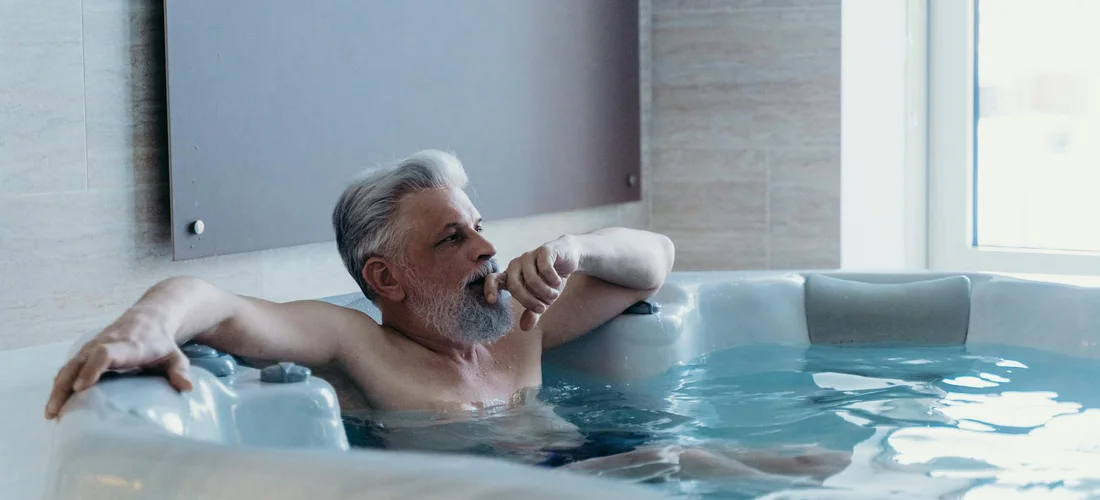
Finding your ideal soak temperature is a personal journey, much like dialing in the perfect water balance. After years of fixing pumps and testing water, I’ve found most folks settle comfortably between 100°F and 102°F—warm enough to relax muscles without feeling oppressive. My own sweet spot is 101°F; it melts away the Texas heat without skyrocketing my electric bill. It’s as crucial as balancing your hot tub water in changing seasonal temperatures.
Listen to your body. Start at 100°F and adjust in one-degree increments. Every degree above 100°F can increase energy consumption by up to 10%, so a lower comfortable setting is a win for your wallet and the pump’s longevity. I learned this after tracking my spa’s power use for a full season.
Seasonal shifts demand flexibility. In summer, I drop my setting to 98°F for a refreshing cool-down. Hotter water accelerates chlorine loss, so if you prefer a 104°F soak, plan to test and adjust sanitizer levels more frequently to keep the water secure. My maintenance log shows a clear pattern of higher bromine demand on my hottest soak days.
Special Considerations: Family Safety First
With kids, elderly family, or pregnant users, temperature becomes a critical safety tool. For young children, I always recommend a maximum of 100°F and strict time limits of 10-15 minutes to prevent dangerous overheating. I’ve coached many parents through setting digital locks on their control panels.
Pregnancy requires extra caution. Medical advice typically suggests keeping water below 101°F and limiting soak time to avoid elevating core body temperature. My neighbor used a floating thermometer to confidently maintain a safe 99°F throughout her pregnancy.
Older adults may have thinner skin or reduced sensitivity. Use a reliable, independent floating thermometer to verify your spa’s digital readout, as internal sensors can and do fail. This simple $10 tool is a non-negotiable in my book for family safety.
Build a safe soak routine with these steps:
- Activate the control panel’s child lock feature to prevent accidental temperature changes.
- Always maintain direct visual supervision when children are in or near the tub.
- Hydrate with cool water before entering to help your body regulate temperature.
- Establish a firm “exit rule” if anyone feels lightheaded, nauseous, or overly fatigued.
How to Adjust and Control Your Spa’s Temperature
Adjusting your temperature is usually a simple button press, but doing it smartly saves energy. On most modern spas, you’ll press a “Temp” or “Set” button and use arrow keys to nudge the setting up or down. My old Balboa system required a specific button-hold sequence I still remember.
For efficiency, think of your heater like your home thermostat. Lowering the setpoint by 5-10 degrees during extended off-periods (like a workweek) can significantly cut costs without risking freeze damage to the plumbing. I program mine to 95°F on weekdays and boost it two hours before my Friday night soak.
If you have an older spa with a rotary knob, the principle is the same. Always shut off power at the GFCI breaker before opening the equipment bay to inspect or adjust any wiring-I’ve felt the hum of live current and it’s a wake-up call.
Follow these general steps for digital control adjustment:
- Locate the temperature setting button on your topside control panel.
- Press it to make the current temperature setting blink or show on the display.
- Use the up/down arrows to select your new desired temperature.
- Press the button again or wait for the display to stop blinking to set it.
- Listen for the faint click of the heater relay engaging within a minute.
Troubleshooting a Stubborn Temperature Sensor
A failing temperature sensor can cause erratic heating, error codes, or sudden shutdowns. If your spa displays “FL,” “OH,” or simply shows a temperature that doesn’t match the water feel, a dirty or faulty sensor is the prime suspect. I’ve rescued many from the scrap heap with a basic clean.
Safety is paramount. Turn off all power to the spa at the main breaker before you even think about touching the sensor wires inside the equipment compartment. I use a non-contact voltage tester to double-check for live current every single time.
Here’s my field-tested method for cleaning a scaled-up thermistor:
- Locate the sensor, a small probe usually threaded into a pipe near the heater.
- Carefully disconnect its wire connector-note the position for reassembly.
- Unscrew or gently pull the probe from its housing.
- Soak the sensor tip in a 50/50 solution of white vinegar and water for 20 minutes to dissolve calcium.
- Rinse with clean water, dry completely with a cloth, and reinstall securely.
If cleaning fails, replacement is straightforward. You must match the sensor’s resistance specification (commonly 10k ohms at 77°F) and seal connections with waterproof marine-grade heat shrink to prevent future corrosion. I keep a universal 10k sensor in my parts kit; they’re inexpensive and a quick fix.
Persistent issues may point elsewhere. Corrosion on the main control board where the sensor plugs in can mimic a bad sensor, requiring careful inspection and possibly professional repair. I once traced a “sensor error” on a Cal Spa to a single corroded pin on the board that needed a delicate cleaning with electrical contact spray.
Smart Temperature Habits for Maintenance and Savings
Running your tub at a constant 104°F feels luxurious, but that hum of the circulation pump working overtime is a wallet-emptier. I’ve pulled more than one overworked pump motor after owners treated their set point like a thermostat, and the repair bill always stings more than the chlorine. Smart temperature habits are about matching the heat to your use, not your maximum comfort dream. If you notice ongoing pump strain, a professional diagnosis of complex hot tub heater and pump issues can help. A pro can pinpoint faulty components before a breakdown.
Think of your heater and pumps as hardworking apprentices; giving them a break extends their life. Dropping the temperature by just 10-15°F when the tub won’t be used for a day or more can slash your energy costs by up to 50%, a trick I verify every winter on my own unit. That savings pays for dichlor and the odd gasket replacement.
- Use a Timer: If your control system allows it, program the filter cycles to run during off-peak electricity hours. I set mine for the early morning when rates are lowest.
- Embrace the Lower Range: For maintenance soaks, 100°F is often perfectly therapeutic and puts far less strain on the system. You can always nudge it up an hour before your soak.
- Insulate Aggressively: A tight-fitting, well-insulated cover is your best friend. Check its weight and foam integrity yearly; a soggy cover might as well be a screen door.
- Listen to Your Equipment: A heater that cycles on and off too frequently or a pump that runs constantly is begging for a break. Lowering the temperature setting is the first and cheapest fix to try.
The Hidden Link Between Temperature and Water Care
Heat transforms your water from a passive pool into a reactive chemical soup. For every 10°F increase in temperature, the rate of chemical reactions-including how fast your sanitizer burns off-can double, a fact that’s clouded more water than any missed filter cleaning. Balancing water isn’t a set-it-and-forget-it task; it’s a dance with the thermometer.
I learned this link the hard way, fighting persistent scaling on a customer’s heater elements until I realized they loved 104°F soaks in our hard Texas water. The combination of high heat and high calcium hardness creates a perfect storm for limescale, that chalky crust that strangles heat transfer and efficiency. Now, I always check the temperature setting before blaming the water chemistry.
- Sanitizer Vanishes Faster: Chlorine or bromine dissipates rapidly in hot water. At 104°F, you might need to add 20-30% more sanitizer after a soak compared to a 100°F tub to maintain a safe 3-5 ppm level.
- pH Becomes Unstable: Warm water drives off carbon dioxide, which can cause your pH to rise unpredictably. Test and adjust pH more frequently when running at higher temps.
- Bacteria Thrive: While sanitizer works faster, bacteria also reproduce quicker in the heat. A slightly low sanitizer level at a high temperature is an open invitation for biofilm in the plumbing lines.
- Total Alkalinity is Your Anchor: Keep your TA between 80-120 ppm. It acts as a buffer, helping prevent the wild pH swings that high heat encourages, making your other chemical adjustments hold.
Always add chemicals to the water, never the other way around, and with the pumps running to mix thoroughly. Pouring concentrated sanitizer into a scorching 104°F footwell can create harsh fumes and degrade your acrylic shell faster than sunlight. Your nose will tell you when something’s off-that sharp chemical sting is a warning sign, not a badge of cleanliness.
FAQs
What is the hot tub temperature range in both Fahrenheit and Celsius?
The safe operating range is typically 100°F to 104°F (38°C to 40°C), with 104°F (40°C) as the absolute maximum for safety, especially when considering health and safety guidelines for hot tub use. For everyday comfort and efficiency, most users find 100°F to 102°F (38°C to 39°C) ideal without overstressing the system.
How does hot tub temperature affect bacteria and water sanitation?
Higher temperatures accelerate bacterial growth but also cause sanitizers like chlorine to dissipate faster. At 104°F, you must test and adjust sanitizer levels more frequently to maintain 3-5 ppm, as imbalance can quickly lead to biofilm and unsafe water.
What is a safe hot tub temperature for seniors?
For older adults, aim for 100°F (38°C) or lower to prevent overheating and skin irritation. Always verify the temperature with a reliable floating thermometer, as internal sensors can drift, and limit soak times to 15-20 minutes for added safety.
How should I set my hot tub temperature when not in use?
During extended non-use, lower the setpoint by 10-15°F (e.g., to 90-95°F or 32-35°C) to save energy and reduce wear on components. This can cut energy costs by up to 50% while keeping the plumbing protected from freezing in most climates.
Is there a recommended temperature chart for different hot tub uses?
While preferences vary, a general guide includes: 98-100°F (37-38°C) for cool refreshes, 100-102°F (38-39°C) for standard relaxation, and 104°F (40°C) maximum for short adult soaks. Adjust based on user age, health, and season, always prioritizing safety over heat, especially for therapeutic sessions.
The Temperature Tune-Up
Before you slip into the water, always fire up the jets for a full minute and test the heat with your elbow or a floating thermometer. I learned this the hard way after fixing a client’s tub where the control panel read 102°F, but stagnant water near the heater was a scalding 110°F-a quick circulation cycle blends it all to a safe, even warmth. This tiny habit is your best defense against a surprise burn.
To stop temperature swings and heater strain for good, lock in this single habit. Once a week, pull and rinse your filters with a garden hose; this maintains unrestricted water flow, letting your heater operate efficiently without overheating or short-cycling. Clear filters mean consistent heat, lower energy bills, and a pump that hums contentedly for years.
You’ve balanced the chemistry and mastered the heat. Time to lower the lights, step in, and let that perfect warmth melt the day away.
Further Reading & Sources
- What is the ideal hot tub temperature?
- Finding the Ideal Temperature For Your Hot Tub | Jacuzzi®
- What’s the optimal temperature for a hot tub? | The Hot Tub and Swim Spa Company
- What Temperature Should A Hot Tub Be | Blue Wave Spas & Service Utah
- What Temperature Should a Hot Tub Be? – Bullfrog Spas
- Ideal Hot Tub Temperature Guide for All Seasons & Users
Charlie is a hot tub enthusiast with a passion for keeping your jets running smooth and your bubbles bursting with joy. With years of experience in hot tub and jacuzzi maintenance, Charlie knows that a happy tub means a happy you. Whether it’s dealing with stubborn filters or giving your spa a little TLC, Charlie’s here to share expert tips, tricks, and plenty of laughs to help you keep your bubbly retreat in tip-top shape. So, kick back, relax, and let Charlie handle the rest — because no one likes a cranky jacuzzi!
Heating Problems