
How to Build a Custom Hot Tub Surround That Fixes Your Soggy, Unsightly Backyard
If your hot tub is sitting on a crumbling slab or a patch of mud that turns into a swamp after every rain, you’re not just dealing with an eyesore. Your diagnosis is a failed foundation, and it’s a nuisance that’s quietly costing you money in water damage and inefficient heating. Left alone, that uneven base stresses your tub’s shell and plumbing.
What You Need:
- A free weekend
- Tape measure, level, and a circular saw
- Pressure-treated lumber and concrete pavers
- Gravel and landscape fabric
- Weather-resistant deck screws
I’ll show you how to pour a stable base and frame a handsome deck that locks out moisture and looks built-in, all without hiring a contractor.
Planning Your DIY Hot Tub Surround Project
Jumping straight into building without a plan is a classic mistake I’ve made myself. A good plan turns a frustrating weekend into a smooth project you can be proud of. Taking time to plan saves you money on wasted materials and prevents the headache of discovering a critical mistake after you’ve started cutting wood.
Start with this simple checklist:
- Measure Twice, Build Once: Get the exact dimensions of your hot tub, including the skirt. Don’t forget to add the planned width of your surround material to your footprint. You need space for the tub to breathe and for you to walk around it safely.
- Call Before You Dig: Check local building codes and homeowner association rules. Some areas require permits for permanent structures, and you absolutely must know where any underground utility lines are before setting posts or digging.
- Never Block Access: Plan for a removable panel or section to reach the equipment bay. Trust me, the day your circulation pump hums strangely, you’ll thank yourself for designing easy access from the start.
- Set a Realistic Budget: Factor in not just decking, but also concrete footings (if needed), fasteners, sealants, and tools you might need to rent. I always add a 15% cushion for those inevitable unexpected costs.
- Sketch Your Design: It doesn’t need to be art. A simple drawing with dimensions helps visualize the final product. Decide on a style-clean and modern with straight lines and composite, or rustic with the warm, natural look of cedar.
Think about integrating features now. Do you want built-in bench seating for guests? A small shelf for drinks or a waterproof storage cubby for chemicals? Incorporating these elements into your initial design is far easier and looks more professional than trying to tack them on later.
Choosing the Best Materials for Durability and Style
The materials you choose face a tough life: constant moisture, chemical splashes, and sun exposure. I’ve seen beautiful cedar turn gray and splintery in just a few seasons without proper care. Your choice sets the tone for maintenance and longevity.
This comparison table lays out your best options:
| Material Type | Pros | Cons | Maintenance Level |
|---|---|---|---|
| Cedar or Redwood | Natural beauty, rot-resistant, pleasant scent, can be stained or left to weather. | Can splinter, requires annual sealing or staining, fades to a silvery gray if untreated. | High. Needs yearly attention to maintain appearance and durability. |
| Composite “Plastic Lumber” | Extremely durable, won’t rot or splinter, color is throughout the material, very low maintenance. | Higher upfront cost, can get hot in direct sun, some brands can stain or mildew. | Very Low. Occasional cleaning with soap and water is typically all it needs. |
| Concrete Pavers or Block | Extremely durable, permanent, excellent for a modern or minimalist look, cool underfoot. | Labor-intensive to install level, hard surface can be unforgiving, grout lines may require sealing. | Low. Just needs occasional rinsing. Check for settled pavers yearly. |
| Cultured Stone Veneer | Gives a high-end, permanent stone look, excellent durability, unique texture. | Requires a solid backing (like a wood frame), skilled installation, higher material and labor cost. | Very Low. Once installed and sealed, it’s virtually maintenance-free. |
| Exterior-Rated Tile | Unlimited design potential, easy to clean, cool and smooth surface. | Requires a perfectly stable, waterproof substrate (concrete backer board), grout must be sealed, can be slippery when wet. | Medium. Grout lines need resealing every year or two to prevent water intrusion and staining. |
No matter the material, always use corrosion-resistant fasteners like hot-dipped galvanized, stainless steel, or coated deck screws to fight rust stains and failure. For adhesives and sealants, look for products labeled for “exterior” or “wet area” use. I’ve had great luck with polyurethane-based construction adhesives and 100% silicone sealant for sealing joints against water.
Preparing a Solid and Level Base

Think of your hot tub’s base like the foundation of a house. If it’s wobbly, everything built on top will be stressed. I’ve seen too many tubs with cracked acrylic shells and strained frames because someone thought “close enough” was good enough for leveling. When the ground is sloped, a truly level base from the start is essential. A level hot tub on sloped ground prevents uneven settling and stress. Let’s get this right from the start.
Evaluating Your Foundation: Concrete Pad vs. Gravel Base
Your two main champions are a concrete pad and a compacted gravel base. Concrete is the permanent, premium choice, while gravel is a fantastic, forgiving DIY option. Here’s how to prep your spot, no matter which you choose. For a deeper comparison, check out our guide on concrete pads, gravel bases, and spa pads.
- Mark and Clear: Stake out an area at least 6 inches wider than your tub on all sides. Remove all sod, roots, and organic material. You want virgin, stable soil.
- Check for Level: Use a long, reliable level and a straight 2×4. Check in multiple directions. Note your high and low spots.
- Ensure Drainage: The finished base must slope very slightly-about a 1/4-inch per foot-away from your house and the tub’s location. This directs rain and splash-out away, preventing a swampy pit.
- Compact the Soil: Rent a plate compactor or use a hand tamper. Go over the exposed soil multiple times until it’s rock-hard and no longer squishy underfoot.
- Build Your Base: For gravel, lay down landscape fabric, then add 4-6 inches of 3/4-inch crushed gravel (not round pea gravel!). Compact it in 2-inch layers. For concrete, form it up and pour at least 4 inches thick.
A perfectly level and compacted base isn’t just about looks; it prevents water from pooling under one corner of the tub, which can freeze and heave, throwing your entire spa out of whack.
Essential Tools for the Job
Gathering your tools first saves frantic trips to the hardware store. Here’s your categorized checklist.
- Measuring & Layout: 25-ft tape measure, 4-ft level, string line, chalk line, speed square, carpenter’s pencil.
- Earthwork: Shovel, spade, wheelbarrow, plate compactor (rental), hand tamper.
- Cutting: Circular saw (with carbide blade for treated wood), jigsaw, reciprocating saw, handsaw.
- Fastening: Cordless drill/driver, impact driver (for long screws), assorted drill bits, socket wrench set.
- Safety: Work gloves, safety goggles, hearing protection, knee pads, dust mask.
Don’t skimp on eye protection, especially when cutting pressure-treated lumber; that chemical dust is no joke, and a flying splinter can end your project day instantly.
Building the Frame and Decking
This is where your surround takes shape. The hum of the circular saw, the smell of fresh-cut wood-it’s the satisfying part. Remember, we’re building a platform that must hold thousands of pounds, not just a decorative skirt.
Step 1: Constructing a Sturdy Frame
Your frame is the skeleton. Use ground-contact rated pressure-treated lumber for anything within 6 inches of the ground. I prefer 2x6s for their strength.
- Build a box on top of your prepared base that matches your desired deck dimensions.
- Ensure it’s perfectly square by measuring the diagonals; they must be equal.
- Check for level in all directions. Use shims under the frame on a concrete pad or adjust the gravel base underneath.
- Add interior joists every 16 inches on center for maximum support under the decking.
- Secure everything with 3-inch galvanized or corrosion-resistant deck screws. Nails can work loose over time.
Take your time on this step—a square and level frame is the secret to a professional-looking deck that doesn’t creak or sag under the weight of a filled spa. Make sure to assess the deck’s structural capacity before installation.
Step 2: Installing the Decking Surface
Whether you choose low-maintenance composite boards or beautiful cedar, the installation principles are similar.
- Plan your board direction to promote water runoff, typically running away from the hot tub shell.
- Start your first board with a straight, true edge. Use spacers (16d nails work great) to maintain a consistent 1/8-inch to 1/4-inch gap between boards for expansion and drainage.
- Attach boards using appropriate fasteners: hidden clip systems for composites, or coated deck screws for wood.
- Always pre-drill holes near the end of wooden planks to prevent splitting.
- Cut carefully around the hot tub’s footprint, leaving the recommended clearance specified in your manual (usually 1-2 inches).
That gap between the decking and the hot tub shell isn’t just for looks; it’s a crucial ventilation space that lets moisture escape and prevents hidden rot from the constant steam and splash-out, no matter whether it’s wood or composite decking.
Step 3: Creating Essential Access Panels
This is the step DIYers most often regret skipping. When your circulation pump hums its last hum at 9 PM on a Sunday, you’ll thank past-you for building smart access.
- Identify all equipment bay doors on your tub. Your deck must provide full, unobstructed access to them.
- Build a sturdy sub-frame around the access area to support the edges of your removable panel.
- Create a panel from your decking material. For a hinged lid, use sturdy stainless steel or brass hinges and a gas strut to hold it open safely. For a removable panel, install recessed finger pulls or lift handles.
- Ensure the panel sits flush and is weather-stripped to keep debris and water from falling into the equipment compartment below.
I build my access panels to be opened with one hand while holding a flashlight and a multimeter in the other-because that’s always the reality of hot tub repair.
Weatherproofing and Protecting Your Investment
Your beautiful new surround now needs armor. The steam from your tub creates a mini rainforest environment, and we must defend against constant moisture.
- Seal All Wood: If using natural wood, apply a high-quality, UV-resistant waterproof sealant to all sides and ends of the boards before installation. Reapply annually.
- Integrate Flashing: Where the deck meets your house or other structures, install metal or vinyl flashing to direct water away from siding and foundations.
- Promote Ventilation: Never enclose the space under the deck with solid skirting. Use lattice or decorative vents to allow air to circulate freely, drying out any moisture that gets underneath.
- Plan for Drainage: Consider installing a subtle channel drain or directing deck runoff toward a specific area with gravel or plants that tolerate extra water.
This proactive protection is what separates a surround that lasts three years from one that lasts fifteen, saving you money and headaches through countless seasons of use.
Adding Functional and Safety Features
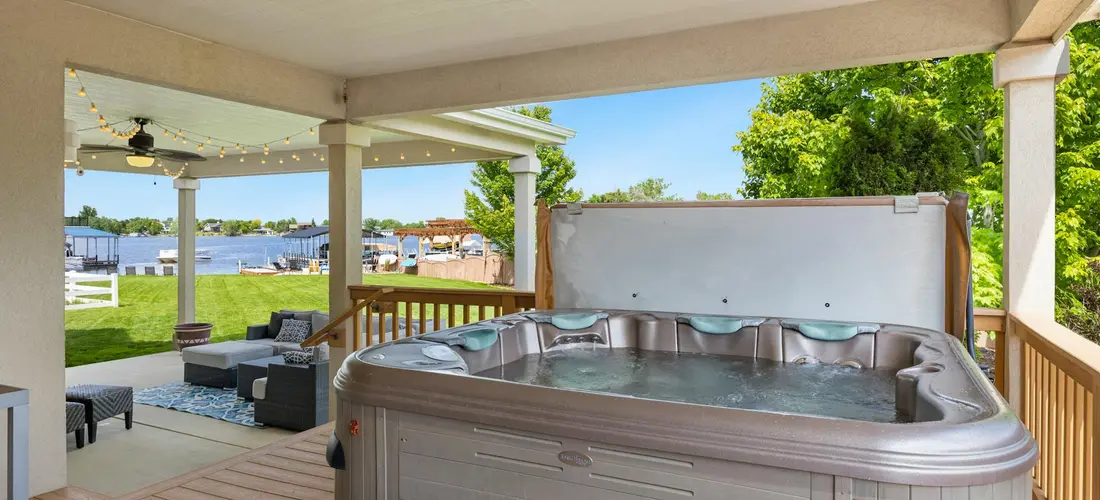
Building Safe and Secure Steps
Getting in and out should feel solid, not shaky. I’ve rebuilt more than a few wobbly steps after seeing how a sudden slip can ruin a relaxing soak. Your steps need a foundation that laughs at weight and weather, starting with stringers cut from 2×12 lumber for a deep, secure footprint. The magic numbers for comfort are a 7-inch rise and an 11-inch run per step; stray too far from that and you’ll feel it in your knees.
Nail down the stringers to your deck frame with galvanized hurricane ties, then cap them with 5/4×6 deck boards. Always choose a slip-resistant surface, like grooved composite decking or apply adhesive anti-slip strips, because wet feet and smooth wood are a dangerous mix. For that final touch of security, bolt on a sturdy handrail on at least one side-it’s a simple upgrade that makes all the difference for everyone.
Integrating Exterior Lighting for Ambiance and Safety
The right lighting transforms your tub from a daytime fixture to an evening retreat. I prefer low-voltage LED systems for their cool operation, miserly energy use, and simple DIY installation. You can weave soft illumination right into the surround with discreet under-lip rope lights or install stylish post-cap lights on any railings. They help create the perfect ambiance around your outdoor hot tub. Pathway lights leading up to the area prevent stumbles and set the mood perfectly.
Remember the hum of the circulation pump? You never want to hear the buzz of a live wire near water. Any permanent wiring within five feet of the waterline must be handled by a licensed electrician to meet code and prevent catastrophic shock. It’s not a place to cut corners; pay the pro for peace of mind and keep your soaks safe.
Ongoing Care and Maintenance for Your Surround
Just like balancing your water chemistry, a little periodic care for your surround stops small issues from becoming big headaches. Set a reminder to walk the perimeter each season and look for trouble spots before they escalate. Your maintenance ritual should be as regular as checking your sanitizer levels.
- Inspect for Rot: Probe wooden posts and beams with a screwdriver; soft spots mean it’s time for a splice repair.
- Reapply Sealant: Refresh water repellent on natural wood yearly, and check caulk lines between stones or tiles.
- Clean Surfaces: Sweep composite decking and wash stone with a mild, neutral pH cleaner to prevent buildup.
- Check for Pests: Look for insect nests or rodent homes in the enclosed framing beneath the tub skirt.
- Ensure Drainage: Keep gravel beds or drainage channels clear of leaves and mud to move water away from the foundation.
I learned this the hard way after neglecting a cedar surround that later needed a full rebuild. A crisp afternoon spent on these tasks protects your investment and keeps your backyard haven looking sharp for years.
Common Questions
How should I design a hot tub surround?
Start by sketching a simple plan that includes the surround’s dimensions, style, and key features. Think ahead to designing perfect hot tub deck layouts, materials, and lighting to guide your choices with cohesion. These design considerations will influence how you select decking materials, lighting levels, and overall layout flow. Your design must include permanent, unobstructed access to the hot tub’s equipment panel for service. Also, integrate practical elements like bench seating or storage into the initial design for a cleaner, more professional result than adding them later.
How do I ensure my hot tub surround is perfectly level?
Use a long, reliable level on a straight 2×4 to check your foundation and frame in multiple directions. A perfectly level base is critical to prevent the tub’s shell from stressing and to stop water from pooling. For the final decking surface, use spacers between boards to maintain even gaps and check for level as you secure each piece. For a broader overview that ties these basics into proper framing, the build frame your jacuzzi tub structural support guide covers load paths and bracing.
What’s the best way to waterproof a wood surround?
Apply a high-quality, UV-resistant waterproof sealant to all sides and ends of the wood boards *before* installation. Annually reapply sealant to all exposed wood surfaces. Additionally, use corrosion-resistant fasteners and integrate metal or vinyl flashing where the deck meets your house to direct water away.
What are the safest options for adding lighting?
Low-voltage LED systems are ideal for their energy efficiency, cool operation, and safety. You can integrate soft, indirect lighting using under-lip rope lights, post-cap lights on railings, or pathway lights. Crucially, any permanent electrical wiring within five feet of the water must be installed by a licensed electrician to meet safety code.
What are key considerations for building safe steps?
Steps need a solid foundation; use stringers cut from 2×12 lumber for strength and secure them to the frame with galvanized ties. For safe and comfortable use, aim for a 7-inch rise and an 11-inch run per step. Always finish the treads with a slip-resistant surface, such as grooved composite decking or anti-slip strips, and install a sturdy handrail.
The Final Touchdown: Your 7-Day Check-In
Before you slip into that first, well-earned soak, give your new surround and tub one final operational check. Turn on the jets at full power and listen. That hum should be smooth, with no new vibrations against your handcrafted frame. Look for any stray drips or damp spots along the base where wood meets shell. This last safety and function test is your guarantee that everything is sealed, solid, and ready for years of relaxation.
Your beautiful new surround protects your tub, but it also creates a hidden space where moisture loves to linger. My golden rule from years of fixing rot and mold behind panels is simple but non-negotiable.
Once a week, lift a section of your removable skirt and run your hand along the tub’s shell and the inner frame-if it feels damp, you’ve caught a potential problem early and your proactive ventilation check just saved you a major repair. It’s similar to maintaining your hot tub cover, where regular care prevents bigger issues.
You’ve built more than a frame; you’ve built your own personal retreat. The hard work is done. Now, go turn on those bubbles, step in, and enjoy the view from inside your masterpiece. You built that.
Further Reading & Sources
- Hot Tub Surround Ideas: Easy Ways to A Beautiful Spa | O-Care.com
- Hot tub surrounds
- Hot Tub Surround | Wayfair
- r/hottub on Reddit: I built my own hot tub surround out of composite decking… I’m enjoying it very much.
- Elegant Hot Tub Surrounds | A&B Outdoor Products
- Discover 54 Hot Tub Surrounds and Hot Tub Patio Ideas
Charlie is a hot tub enthusiast with a passion for keeping your jets running smooth and your bubbles bursting with joy. With years of experience in hot tub and jacuzzi maintenance, Charlie knows that a happy tub means a happy you. Whether it’s dealing with stubborn filters or giving your spa a little TLC, Charlie’s here to share expert tips, tricks, and plenty of laughs to help you keep your bubbly retreat in tip-top shape. So, kick back, relax, and let Charlie handle the rest — because no one likes a cranky jacuzzi!
Outdoor Setup