
Senior Hot Tub Safety: Spot the Hidden Risks Before You Step In
If you or a loved one feels lightheaded, unsteady, or overheated after using the spa, your hot tub’s environment, not just the water, needs an immediate safety check. This isn’t just about comfort-it’s a signal that temperature, hydration, or slip hazards are not properly managed, creating real danger for older adults.
What You Need:
- A Reliable Floating Thermometer
- Non-Slip Mats for Inside & Out
- A Full Water Bottle
- 5 Minutes for a Pre-Soak Inspection
I’ll show you how to identify and neutralize these risks yourself, turning your spa back into the safe retreat it should be.
Core Hot Tub Hazards Every Senior and Caregiver Must Know
Let’s talk frankly about the dangers that can turn relaxation into a trip to the emergency room. After decades of fixing pumps and balancing water, I’ve learned that foresight is the best tool for preventing accidents.
The immediate physical dangers are often the most obvious, but that doesn’t make them less serious.
- Slips and falls on wet surfaces: A wet deck or step is a prime setup for a life-altering hip or wrist fracture. The moment you step out, gravity doesn’t forgive.
- Scalds from overheated water: Aging skin is thinner and more vulnerable. I’ve calibrated thermostats reading a “safe” 102°F that were actually pumping out water at 108°F at the jet-a temperature that can cause a first-degree burn in under five minutes.
- Loss of balance leading to injury: The buoyancy fools you. Rising quickly can cause a head rush, making a fall back into the shell or onto the hard patio a real risk.
Now, let’s uncover the hidden threats that work slowly but are just as dangerous.
- Overheating (heat stroke): Your body’s natural cooling becomes less efficient. A long soak can silently spike your core temperature, leading to confusion, nausea, and collapse.
- Severe dehydration: You sweat profusely in hot water, even if you don’t feel it. Without sipping cool water, dehydration creeps in, stressing your kidneys and heart.
- Dizziness and fainting (syncope): The heat causes blood vessels to dilate rapidly, dropping blood pressure. When you stand, blood pools in your legs, which can lead to a sudden blackout.
Here’s the critical link many miss. Routine water maintenance isn’t just about clarity; it’s a direct safety protocol for senior users. Water with a pH out of the 7.4-7.6 range feels harsh, like vinegar on a scratch, irritating sensitive skin. Neglecting your weekly shock treatment allows slippery biofilm-a slimy layer of bacteria-to coat every surface. This biofilm is more treacherous than algae, dramatically increasing the risk of a catastrophic fall on steps or the tub floor.
Keep this table handy to quickly identify, understand, and counteract the top risks.
| Risk | Cause | Quick Fix |
|---|---|---|
| Scald Burns | Faulty thermostat or setting above 104°F (40°C) | Check temperature with a certified digital thermometer; set to 100°F max. |
| Slips & Falls | Wet surfaces combined with slippery biofilm | Scrub shell and steps with a filter cleaner monthly; add abrasive, non-slip mats. |
| Overheating & Dizziness | Soaking beyond 15 minutes in hot water | Use a kitchen timer; exit slowly using installed grab bars. |
| Skin Irritation & Rashes | Poor water balance (low pH, high chlorine over 5 ppm) | Test water twice weekly; adjust alkalinity first, then pH, before sanitizer. |
Why Pre-Existing Conditions Demand Extra Caution
Heart and Circulation Concerns
Soaking in hot water is like asking your heart to run a sprint while you’re sitting still. The sudden vasodilation forces your heart to work much harder to pump blood, which can trigger arrhythmias or dangerous drops in blood pressure. I’ve had clients with hypertension tell me they felt a worrying palpitation moments after settling into the bubbles. It’s especially concerning if you’re not properly hydrated beforehand.
- Make a pre-soak health check mandatory. If your pulse feels irregular or you’re fatigued, listen to your body and stay out.
- Absolutely limit soak time. Ten to fifteen minutes is the safe maximum-use the hum of the circulation pump cycle as your cue to get out.
Diabetes and Arthritis Complications
For those managing diabetes, nerve damage can numb extremities to temperature. An unnoticed scald on a toe can fester into a ulcer that heals painfully slow. The increased blood flow from heat can also push more sugar to peripheral wounds, raising infection risk. Arthritis pain might melt away in the warmth, but the relief is often fleeting.
- Moderate your tub’s temperature. A range of 98°F to 100°F soothes aching joints without the scald risk.
- Follow a deliberate cool-down routine. Wrap up in a robe and sit in cooler air for 10 minutes before moving to prevent stiff, painful flare-ups.
Respiratory Risks and Medication Interactions
That steamy air is a burden for fragile lungs. For someone with COPD, the thick humidity can feel suffocating, constricting airways instead of clearing them. Aerosols from a tub with low sanitizer can harbor Legionella bacteria, a severe pneumonia risk for anyone with a compromised immune system.
Your prescriptions play a huge role. Common medications for blood pressure, heart conditions, and diabetes can dramatically increase your sensitivity to heat, dizziness, and dehydration. A diuretic, for instance, paired with hot tubbing is a recipe for dangerous electrolyte imbalance.
- Ensure the tub area is well-ventilated to prevent humid air from stagnating.
- Maintain rigorous sanitizer levels-I keep mine at a steady 4 ppm bromine-to destroy waterborne pathogens before they become airborne.
- Have a frank chat with your doctor or pharmacist about every medication’s interaction with heat and immersion.
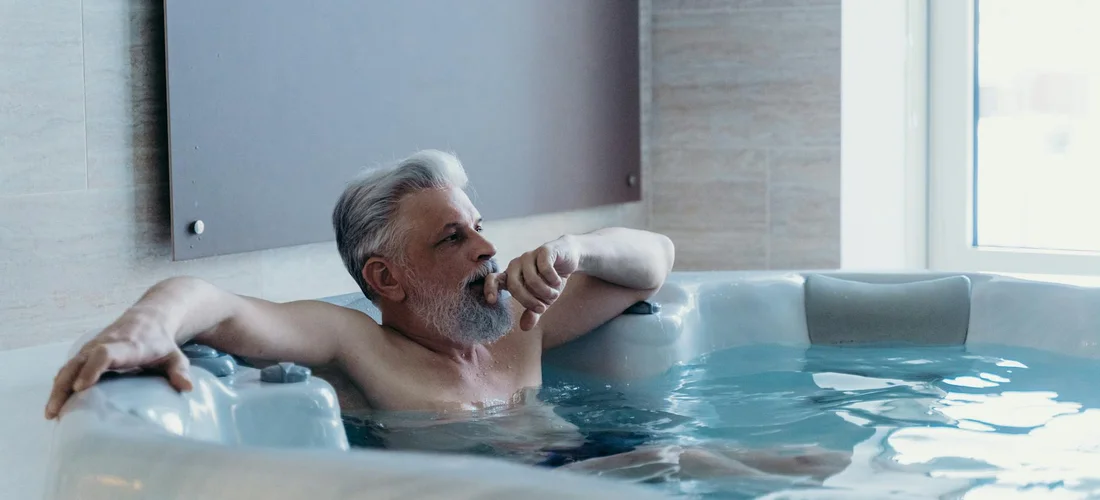
Your Pre-Soak Safety Checklist for Elderly Users
-
Step 1: Hydrate. Drink a full glass of water before entering to fight dehydration. That hot water pulls moisture from your body faster than you think. From my time balancing water chemistry, I’ve learned that starting hydrated helps your body handle the heat and keeps you from feeling lightheaded later.
-
Step 2: Test the Water. Use a reliable thermometer; verify temp is at or below 104°F (40°C). Don’t trust the tub’s display alone-a floating pool thermometer is a cheap, trustworthy backup. I calibrated one last week that was reading a dangerous 107°F, a simple fix that prevented a real risk. Keeping the water at the ideal hot tub temperature is essential for safety and comfort. We’ll expand on maintaining that safe, comfortable range in the next steps.
-
Step 3: Check Chemical Balance. Use test strips to confirm safe pH (7.2-7.8) and sanitizer levels to prevent skin irritation. Unbalanced water feels harsh and can cause rashes. After fixing many pump clogs from scale, I now test water like I’m seasoning soup-too much or too little of anything ruins the soak.
-
Step 4: Install Physical Aids. Ensure grab bars, non-slip mats, and sturdy steps are securely in place. Check that suction cups are gripping and screws are tight. I’ve retrofitted dozens of tubs with ADA-compliant bars; that solid grip is what prevents a slip from becoming a fall.
-
Step 5: The Buddy System. Never soak alone; have a helper present. This isn’t just about companionship-it’s a safety net. Having someone there to hand you a towel or offer an arm makes the whole experience secure and relaxing.
Setting the Safe Temperature: No Guesswork Allowed
-
State the maximum safe temperature of 104°F (40°C) and recommend a senior-friendly range of 98-100°F (37-38°C). Higher temps strain the heart and can cause dizziness. For my older clients, I always set the digital thermostat to 99°F-it’s warm enough to soothe aches without the risk of overheating. Pair these temperatures with short, supervised hydrotherapy sessions to optimize safety. Duration should be tailored to the individual, starting with brief exposures and gradually increasing as tolerated.
-
Explain how to calibrate or set your hot tub’s digital thermostat accurately. Access the control panel, hold the temperature button, and adjust in one-degree increments. If the readout seems off, compare it with a glass thermometer placed in the water for five minutes; this DIY check saved a customer from a costly service call—especially when you’re unsure about the actual maximum temperature a hot tub should reach.
-
Advise on limiting soak time to 15-20 minutes maximum to prevent overheating. Set a kitchen timer or use a watch. Longer soaks don’t add benefit, they just drain your energy and dehydrate you, something I’ve seen firsthand when balancing water for fatigued users.
-
Describe the “cool-down” protocol: exiting slowly and sitting on the edge for a minute before standing. Let your heart rate adjust. This pause is crucial-it lets your circulation catch up, preventing the sudden drop in blood pressure that can lead to a fall.
Recognizing Emergency Signs: What to Watch For
Soaking should be relaxing, not alarming. With an elderly user, vigilance is your best tool. Watch their face and listen to their words. The first warning signs are often subtle.
If you see a glazed look, sudden confusion, or excessive skin redness that seems uneven, it’s time to act. Paleness, especially around the lips, is another red flag you can’t ignore.
Listen to Their Complaints
Dismissing a simple complaint can be a mistake. Take these physical warnings seriously:
- Dizziness or lightheadedness upon standing.
- A sudden, pounding headache.
- Unusual fatigue or weakness mid-soak.
- Muscle cramping, especially in the legs or abdomen.
Your Immediate Action Plan
If any signs appear, follow these steps without delay. Hesitation can escalate the situation.
- Calmly help the user exit the spa immediately. Provide steady support.
- Have them sit in a cool, shaded area. Apply damp towels to the neck, wrists, and forehead.
- Offer sips of cool water to rehydrate slowly.
- If symptoms do not resolve quickly within 10-15 minutes, or if they worsen, call for medical assistance without second thought.
A poorly maintained spa directly increases these risks. Cloudy water hides problems and breeds irritants.
That sharp chemical smell isn’t “clean”-it’s chloramine gas, which can severely irritate lungs and compound breathing difficulties for someone with respiratory concerns. Clear, odor-free water is a foundational safety feature.
Proactive Maintenance for a Senior-Safe Spa
Think of maintenance not as a chore, but as building a safe environment. For senior users, precision and gentleness in your routine make all the difference. Exploring essential hot tub maintenance tasks every season can help you stay on top of water quality and equipment health. It also supports a routine that’s manageable and safe.
Water Chemistry for Sensitive Skin
Aging skin is thinner and more reactive. Balancing your water isn’t just about clarity; it’s about comfort. I keep my own spa’s pH between a tight 7.4 and 7.6 for this reason.
- Aim for a pH of 7.2-7.8, but tighter is better. This range prevents the water from becoming acidic or scale-forming, both of which can cause itchiness.
- Maintain Total Alkalinity between 80-120 ppm. This is your pH’s anchor, preventing sudden swings that sting eyes and dry skin.
Ditch the harsh chlorine shocks. For a gentler, more stable soak, I recommend a bromine system or a mineral cartridge (like silver ions) paired with a non-chlorine oxidizer. These are less irritating to skin and lungs.
Your filter is the kidney of your spa. A clean filter means cleaner water and better circulation for even chemical distribution. For a practical, at-home approach, our clean hot tub filter dishwasher guide can help you refresh filters safely and efficiently. It walks you through the basics and best practices to keep your spa at its best.
Every week, pull that filter and rinse it thoroughly with a hose, spraying between the pleats to blast out oils and debris. Soak it in a proper filter cleaner solution once a month to dissolve invisible contaminants.
Physical Spa Modifications and Upkeep
Safety is also about grip and stability. A few DIY additions can prevent a tragic slip.
- Install stainless steel grab bars, anchored directly into the spa’s internal frame or a solid deck joist-never just into the acrylic shell.
- Apply outdoor-grade, abrasive non-slip tape to every step and on the spa floor around the entrance.
- Ensure the path to and from the spa is well-lit. Solar path lights are an easy, wire-free solution.
Reduce physical strain. A quality cover lifter is worth every penny. Wondering which are the best hot tub cover lifters and whether you should install them? Consider a handrail specifically for the steps if your model has a high tub wall.
Once a month, do a quick system check: listen for the steady hum of the circulation pump and feel that the heater is delivering consistent, stable heat. Erratic temperatures are a major stressor for the body.
FAQs
What are the specific hot tub risks for elderly users?
Elderly users face heightened risks due to age-related changes. Key dangers include slips and falls from wet surfaces, scalds from overheated water on thinner skin, and systemic issues like overheating or dehydration. Additionally, poor water maintenance can lead to slippery biofilm or chemical irritation, increasing fall and skin injury risks.
How does hot tub use affect elderly individuals with pre-existing health conditions?
Hot tub use can exacerbate conditions like heart disease by forcing the heart to work harder, and diabetes by increasing infection risk from unnoticed burns. For arthritis, heat may offer temporary relief but can lead to flare-ups after cooling. Respiratory conditions like COPD can worsen due to humid air, and medications for blood pressure or diabetes often heighten sensitivity to heat and dizziness. Are there any health risks or side effects of hot tub use? Understanding them can help readers weigh safety tips and precautions.
What safety measures should elderly users take before using a hot tub?
Elderly users should follow a pre-soak checklist: hydrate with water, test temperature with a thermometer, and check chemical balance with test strips. Ensure physical aids like grab bars and non-slip mats are secure, and always use the buddy system with a helper present to assist if needed.
Are there temperature guidelines recommended for elderly hot tub users?
Yes, the maximum safe temperature is 104°F (40°C), but a senior-friendly range is 98-100°F (37-38°C) to reduce heart strain. Soak time should be limited to 15-20 minutes, and users should exit slowly, sitting on the edge to cool down before standing to prevent dizziness. General health safety guidelines for hot tub use also emphasize hydration, avoiding alcohol, and listening to your body’s signals. Following these guidelines alongside the temperature and soak-time advice helps ensure safe enjoyment.
What are the signs of overheating or distress in elderly hot tub users?
Watch for signs like confusion, glazed eyes, excessive skin redness, or paleness. Listen for complaints of dizziness, headache, fatigue, or muscle cramps. If any signs appear, help the user exit immediately, cool them with damp towels, offer sips of water, and seek medical aid if symptoms persist.
The Final Safety Check
Before you ease into that warm embrace, make the pre-soak ritual non-negotiable. Run the jets for a full minute, feeling the water’s current and listening for the pump’s steady hum. Test the temperature with your hand-it should feel soothing, never hot or startling. This sixty-second habit is your last line of defense, confirming everything is working as it should before any weight touches the water.
The single most powerful habit to keep this safe space secure is a simple filter rinse. Biofilms and bacteria cling to dirty filters, undermining your sanitizer no matter how much you add. Rinse your filters with fresh water every single week and give them a deep chemical soak once a month; this simple discipline strips away the hidden risks and keeps your water truly protected. It’s the maintenance I never skip on my own tub.
You’ve done the hard work. Now, lower the lights, step in carefully, and let the warm water do its thing. A safe soak is a perfect soak. Enjoy it.
Further Reading & Sources
- Benefits and Risks of Hot Tubs – Seniors Guide
- Hot Tub and Swim Spa Safety Tips for Seniors and the Elderly
- Top Hot Tubs for Seniors: Comfort, Safety & Value | Sundance® Spas
- Hot Tub Safety: Risks and Side Effects to Know
- Are Hot Tubs Dangerous for Seniors? | Pool Fence
- Keeping Seniors Safe In Hot Tubs – TerraBella Senior Living
Charlie is a hot tub enthusiast with a passion for keeping your jets running smooth and your bubbles bursting with joy. With years of experience in hot tub and jacuzzi maintenance, Charlie knows that a happy tub means a happy you. Whether it’s dealing with stubborn filters or giving your spa a little TLC, Charlie’s here to share expert tips, tricks, and plenty of laughs to help you keep your bubbly retreat in tip-top shape. So, kick back, relax, and let Charlie handle the rest — because no one likes a cranky jacuzzi!
Safety Tips