
Stop Deck Disaster: How to Assess Hot Tub Weight Support in 3 Critical Steps
If your deck boards are bowing, joists are visibly sagging, or you hear persistent creaking underfoot, your deck is signaling overload and risks a dangerous collapse. This is a serious structural hazard, not a simple nuisance-ignoring it could lead to injury and massive repair bills.
- What You Need:
- A reliable four-foot level
- Tape measure for spans and gaps
- Bright flashlight for dark crawl spaces
- 30 focused minutes
I’ve reinforced dozens of decks for spas, and this guide will equip you to diagnose and address weaknesses without a single professional call.
The Staggering Weight of a Filled Hot Tub: More Than Just Water
You hear the gentle hum of the circulation pump and feel the warmth, but that relaxing soak sits on a literal ton of weight. I’ve pulled up to jobs where a deck has visibly sagged under a new tub, and it always starts with underestimating the load. Forget just the water; you must add the tub’s empty weight, the water itself, and the people inside to get the true, staggering total.
- Empty Tub Weight: This varies wildly. A simple acrylic spa might be 500 pounds, while a robust, fully-featured model can hit 1,000 pounds or more before a drop of water is added.
- Water Weight: This is the big one. Water weighs 8.34 pounds per gallon. A modest 300-gallon tub holds over 2,500 pounds of water alone-that’s like parking a small car on your deck.
- Bather Weight: Don’t forget the people! Add another 150-200 pounds per person enjoying the soak.
Let’s do the math for a common 400-gallon hot tub. The water is 3,336 pounds. Add an 800-pound tub and four 175-pound adults, and you’re suddenly asking your deck to hold nearly 5,000 pounds in one spot. This concentrated load is why a deck that holds a patio set just fine can fail spectacularly under a hot tub. Choosing the right deck type for a hot tub—whether wood, composite, or another material—matters for safety and longevity. This sets up the next steps, where we’ll compare installing hot tubs on different deck types.
| Tub Size (Gallons) | Water Weight (lbs) | + Tub (approx. lbs) | + 4 Bathers (lbs) | Total Approx. Weight (lbs) |
|---|---|---|---|---|
| 250 | 2,085 | 700 | 700 | 3,485 |
| 350 | 2,919 | 850 | 700 | 4,469 |
| 450 | 3,753 | 1,000 | 700 | 5,453 |
In engineering terms, you’re dealing with two forces. The dead load is the permanent, static weight of the empty tub and the water you keep in it. The live load is the dynamic weight from bathers, snow accumulation on the cover, or even someone jumping in. Your deck must be built to handle the combined peak load, not just the everyday empty weight.
How to Perform a Basic Deck Structural Assessment
Before you even think about delivery day, grab a flashlight and a screwdriver for a hands-on inspection. I’ve crawled under more decks than I can count, and the problems are usually in the details you don’t see from above. This 20-minute check can save you thousands in repairs or, worse, prevent a dangerous collapse.
-
Inspect the Ledger Board Connection
This is where your deck attaches to your house-the most critical link. Look for rusted or missing lag bolts. Probe the wood with a screwdriver; if it’s soft or crumbly, you have rot. I once found a ledger board hanging on by paint and hope because the flashing had failed. Any compromise here means the entire deck is compromised. -
Examine Joists, Beams, and Posts for Integrity
Look for signs of sagging, large cracks, or insect damage. Pay special attention to where wood meets soil. Give posts a firm push; they shouldn’t wiggle. Mushy wood or a sawdust-like residue (frass) means carpenter ants or termites are eating your safety margin. -
Measure Joist Size, Spacing, and Span
This tells you the deck’s “bone structure.” Use a tape measure. Common support for a hot tub requires 2×8 or larger joists, spaced 12 inches on center or less, spanning no more than 8 feet between beams. If your joists are 2x6s spaced 16 inches apart, they are likely insufficient for concentrated weight (especially for heavier hot tubs). -
Check Post Footings and Frost Depth
Footings should be concrete and extend below your local frost line to prevent heaving. Look for cracks in the concrete or posts that have lifted out of the ground. In colder climates, I’ve seen decks shift several inches over a winter, putting massive stress on every connection. Unstable footings cannot be trusted with a hot tub’s dead load. -
Look for Loose or Corroded Fasteners
Shake handrails and step on deck boards to check for movement. Look at metal joist hangers and post caps. Rust or bent nails are red flags. Modern decks use galvanized or stainless steel connectors for a reason. Corrosion weakens these critical points silently, often failing without warning.
This checklist is your first defense. If anything gives you pause, stop and consult a professional structural engineer. It’s far cheaper to reinforce a deck now than to repair a fallen hot tub and a shattered deck later. Your safety and your investment depend on this foundation being sound.
Understanding Deck Load Capacity and Your Tub’s “Load Path”
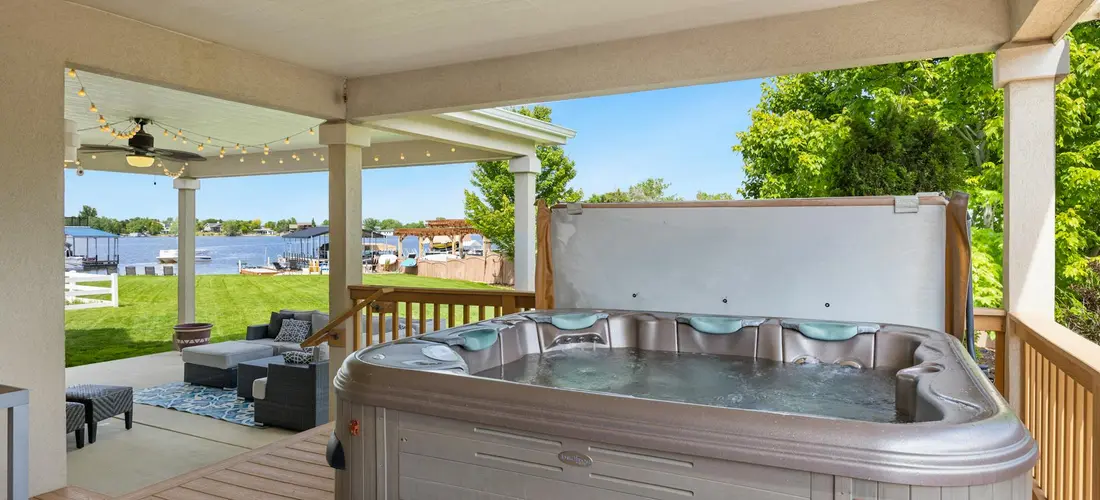
Think of your deck’s structure as a tree. The leaves (the hot tub) are supported by twigs (the deck boards), which are held up by branches (the joists), which connect to the trunk (the beam), all rooted in the ground (the footings). That journey the weight takes from the tub to the earth is called the load path. Every single connection in that chain must be strong enough for the load, which for a filled hot tub is immense-often over 5,000 pounds concentrated in one spot. This is crucial when using hot tubs with various mechanical components that add to the weight.
You’ll hear a few key terms when assessing strength. Joist sizing (like 2×8 or 2×10) refers to the depth of the floor framing; deeper boards can span longer distances without bending. Beam span is the unsupported distance a main support beam crosses, and post footing size (like a 12-inch diameter concrete pier) determines how that weight is spread into the soil. A standard residential deck is often built for a “live load” of about 40-60 pounds per square foot, which is for people and furniture spread out.
A hot tub’s weight is a different beast—it’s a concentrated, static load that can easily double or triple the pressure on a small area of your deck, which is why most pre-existing decks aren’t built for it without reinforcement. Local building codes include safety factors and will dictate the specific requirements for a hot tub; any major modification like adding a tub will likely require a permit and a professional stamp to ensure the load path is sound from the footing up. Consider hot tub deck weight safety considerations when planning the install. Have a structural professional verify the load path and footing adequacy.
Critical Factors: Joist Spacing, Lumber Grade, and Beam Support
Three elements make or break your deck’s muscle. First, joist spacing. Standard spacing is 16 inches from the center of one joist to the next (16″ on-center). For hot tub support, moving to 12-inch on-center spacing significantly increases strength by reducing the span each deck board and the tub itself must bridge.
Second, lumber grade matters more than you think. Common #2 grade pine has more knots and potential weak points than a higher-grade #1 or engineered lumber like LVL (Laminated Veneer Lumber). I’ve seen too many decks where the joists were the right size but failed because the wood itself wasn’t graded for the task, showing a pronounced sag right under the pump compartment.
Finally, ideal beam support is non-negotiable. The hot tub must sit directly over, or run perpendicular to, the main support beams and the posts below them. Having your tub’s corners land between beams, just on the decking, is a recipe for catastrophic failure. The weight must have the shortest, strongest possible route to the footings. This is especially important when installing a hot tub on a balcony, where weight and safety are critical considerations.
Red Flags: Signs Your Deck Definitely Can’t Support a Hot Tub
Before you even think about a water test, walk outside and look for these deal-breakers. If you see any of these, stop right there-your deck is telling you it’s not up for the job.
- Noticeable bounce or deflection: If the deck feels springy or moves when you walk across it, that’s a fundamental lack of stiffness.
- Visible sagging or dip: Sight down the edge of the deck. Any horizontal dip means the joists or beams have already overloaded.
- Rotting or insect-damaged wood: Probe posts and joists with a screwdriver. Soft, spongy, or crumbly wood has lost its structural integrity.
- Cracked, crumbling, or undersized concrete footings: Footings should be deep, wide, and sound. Surface-level patio blocks don’t count.
- Rusted-through or bent joist hangers and hardware: These metal connectors are critical; severe rust compromises their strength.
- Any pre-existing instability: Does the whole structure sway? Are railings loose? This indicates broader framing issues.
- A deck built without a permit or obvious structural plan: Many older DIY decks were built for barbecues, not bathtubs weighing thousands of pounds. When in doubt, assume it’s not strong enough until a qualified contractor or structural engineer says otherwise-this is one area where guessing can lead to very expensive or dangerous consequences.
Reinforcement Strategies: How to Strengthen Your Deck for a Tub

If your deck needs a boost, you’re not out of luck. Think of it like strengthening a bench-you add more legs or thicker boards underneath. Your goal is to transfer the immense load of the full tub directly down to solid, undisturbed earth. You have options, from a weekend DIY project to hiring a pro for a full retrofit.
- Add New Concrete Footings and Posts: This is the most robust solution. You install new, code-compliant footings directly under the tub’s planned location, then run posts up to new beams under the deck joists. It creates a dedicated support “table” just for the tub.
- Sister New Joists: Nail or bolt new pressure-treated joists directly alongside the existing ones under the tub area. Use full lengths from beam to beam. This effectively doubles the thickness of the floor structure.
- Install a New Header Beam: If the tub sits near the deck’s edge, adding a new, larger beam parallel to the existing ledger can drastically reduce the span the joists must bridge.
- Reduce Joist Span with Support Posts: Adding a new beam and posts mid-span cuts the effective joist length in half, which massively increases their weight capacity.
One non-negotiable rule: use only galvanized, stainless steel, or other corrosion-resistant fasteners-nuts, bolts, joist hangers, and post bases-for any reinforcement in a wet hot tub environment. Standard hardware will rust away in a few seasons, creating a dangerous hidden weakness, which can compromise hot tub safety.
Proper Footings: The Non-Negotiable Foundation
Any new support must start with a proper footing. I’ve seen decks shift and crack because footings were just patio blocks on dirt. A true concrete pier footing anchors your entire structure and prevents frost heave, where freezing ground literally lifts your deck-and tub-out of level.
- Depth is Critical: Footings must extend below your local frost line. Your city’s building department can give you this number; it’s often 12 to 48 inches deep. This ensures the footing rests on soil that doesn’t freeze.
- Size Matters: A typical minimum diameter is 12 inches. For a heavy tub, I often pour 16-inch diameter footings. More concrete spreads the load over more soil.
- The Process: Dig a straight-sided hole to the required depth. Set a tubular cardboard form so the top is level and a few inches above grade. Fill with concrete, inserting a galvanized post base anchor or J-bolt while wet. Let it cure fully-usually 48 hours-before attaching posts.
Never set a post directly in concrete; always use a rated metal connector. This prevents wood from wicking up moisture and rotting at the concrete interface, which is the number one failure point I find in the field.
Long-Term Hot Tub Deck Care and Maintenance
Once your tub is safely installed, the work shifts to vigilance. Water and weight are constant forces, and a small issue left unchecked can become a big, expensive problem. Schedule a simple annual inspection of the structure, ideally in the dry season when you can see everything clearly.
- Annual Structural Inspection: Get under the deck with a flashlight and a screwdriver. Probe posts and joists for soft spots indicating rot. Look for rust streaks on fasteners or cracked connectors.
- Manage Water Flow: Ensure the ground slopes away from footings and posts. Redirect downspouts. Standing water or constant dampness at the base of posts is an invitation for rot and insect damage.
- Reseal the Wood: Every two to three years, clean and apply a high-quality water-repellent sealant to the deck surface and, crucially, the ends of boards and joists. This minimizes water absorption from splash-out and humidity.
- Check Fastener Tightness: Every few years, give critical nuts and bolts a gentle turn with a wrench. Wood shrinks and swells; a snug connection today might be loose tomorrow.
Listen to your deck: new creaks, a visible sag, or feeling a spongy spot when you walk near the tub are urgent signs to stop using it and investigate immediately. Proactive care is far cheaper than a catastrophic failure.
FAQs
What is the total load of a hot tub on a deck?
The total load is the combined weight of the empty hot tub, the water it holds (at 8.34 pounds per gallon), and the occupants. This concentrated load often exceeds 5,000 pounds, far surpassing the distributed weight of typical deck furniture. It’s critical to account for this peak weight to prevent structural failure. A hot tub deck weight load calculation guide can help you plan safe supports and avoid structural failure. By plugging in water volume, occupant count, and accessory weight, you can estimate the peak load accurately.
How do I calculate the weight of my hot tub?
Calculate by summing three components: the tub’s empty weight (from manufacturer specifications), the water weight (gallons × 8.34 lbs), and the bather weight (estimate 150-200 lbs per person). Knowing the average weight of a full hot tub helps determine safe placement and the structural requirements it imposes. That’s why the average full-weight matters for planning and safety. For safety, always use the maximum potential load, including full capacity and snow on the cover, to ensure your deck can handle it.
Can my existing deck support a hot tub’s concentrated load?
Most residential decks are designed for uniform live loads, not the intense concentration of a hot tub (especially inflatable ones). Key factors like joist spacing (ideally 12 inches on-center), beam placement, and footing depth must be evaluated. If your deck shows any sagging, bounce, or decay, reinforcement is likely necessary before installation.
What is the difference between live load and dead load for a hot tub?
Dead load refers to the static, permanent weight of the empty tub and the water kept in it. Live load involves dynamic forces from bathers, snow accumulation, or activity. Your deck’s structure must withstand the combined total, with live load adding variable stress that requires a higher safety margin.
Are there calculators or formulas to assess if my deck can support a hot tub?
Yes, online calculators and formulas exist, often based on joist size, spacing, span, and material grade. These tools help estimate capacity by inputting your deck’s specs and the hot tub’s weight. However, for a reliable assessment, always cross-check with local building codes and consider a professional evaluation to avoid errors. Also, as you plan, think about designing the perfect hot tub deck layouts, selecting materials, and planning lighting to enhance usability and ambiance. In the next steps, these design elements can be explored in detail.
The Last-Minute Swell Test
You’ve done the math and inspected the bones. Before you light the jets and slip into that first, well-earned soak, perform one final, real-world check. Fill the tub completely, run all pumps on high, and have a few people get in. Walk around the perimeter of your deck. Listen for any new creaks or groans. Look for any flexing in the joists or movement in the posts. This live-load test under full weight and motion is the ultimate proof of your deck’s integrity and your own peace of mind.
The most common mistake I see isn’t a bad initial install; it’s the slow, silent damage from neglect. Water is a deck’s silent enemy. Make it your golden rule to divert every single gallon of splash-out and rain runoff away from your deck’s ledger board and support posts after every use, and you’ll prevent rot from ever undermining your hard work.
You’ve done the detective work. You’ve reinforced what needed it. Now, go turn up the heat. You’ve earned every bubbly inch of it.
Further Reading & Sources
- How Heavy is a Hot Tub? | Hot Tub Weights | Platinum Spas
- Hot Tub Specifications: Your Complete Guide to the Size, Shape and Weight of Hot Tubs
- How Much Do Hot Tubs Weigh? Everything You Need to Know
- Can My Deck Handle a Hot Tub? – HotSpring Spas and Pool Tables 2
- How Much Does a Hot Tub Weigh? | Hot Tub Installation Tips
- How Heavy Is a Hot Tub? A Complete Guide to Weight, Sizes & Moving Tips | Buenospa
Charlie is a hot tub enthusiast with a passion for keeping your jets running smooth and your bubbles bursting with joy. With years of experience in hot tub and jacuzzi maintenance, Charlie knows that a happy tub means a happy you. Whether it’s dealing with stubborn filters or giving your spa a little TLC, Charlie’s here to share expert tips, tricks, and plenty of laughs to help you keep your bubbly retreat in tip-top shape. So, kick back, relax, and let Charlie handle the rest — because no one likes a cranky jacuzzi!
Outdoor Setup